
Implant Bone Grafts —
How Much Longer Does Treatment Take?
Implant bone graft treatment time depends on the condition of your bone. From when a graft is needed to digital care and the final restoration — Smile Digital Dental Clinic near Seomyeon Station explains, based on a precise CT exam.
Implant consultations often bring up one question: "Does treatment take a lot longer if I need a bone graft?" When a graft is done together with the implant, the grafted area needs time to stabilize, so treatment can take longer. But not everyone needs a bone graft — it depends on how much bone remains and which treatment approach is used. Here, Smile Digital Dental Clinic in Busan Seomyeon looks at implant bone graft treatment time, when a bone graft is needed, and what role digital care plays along the way.
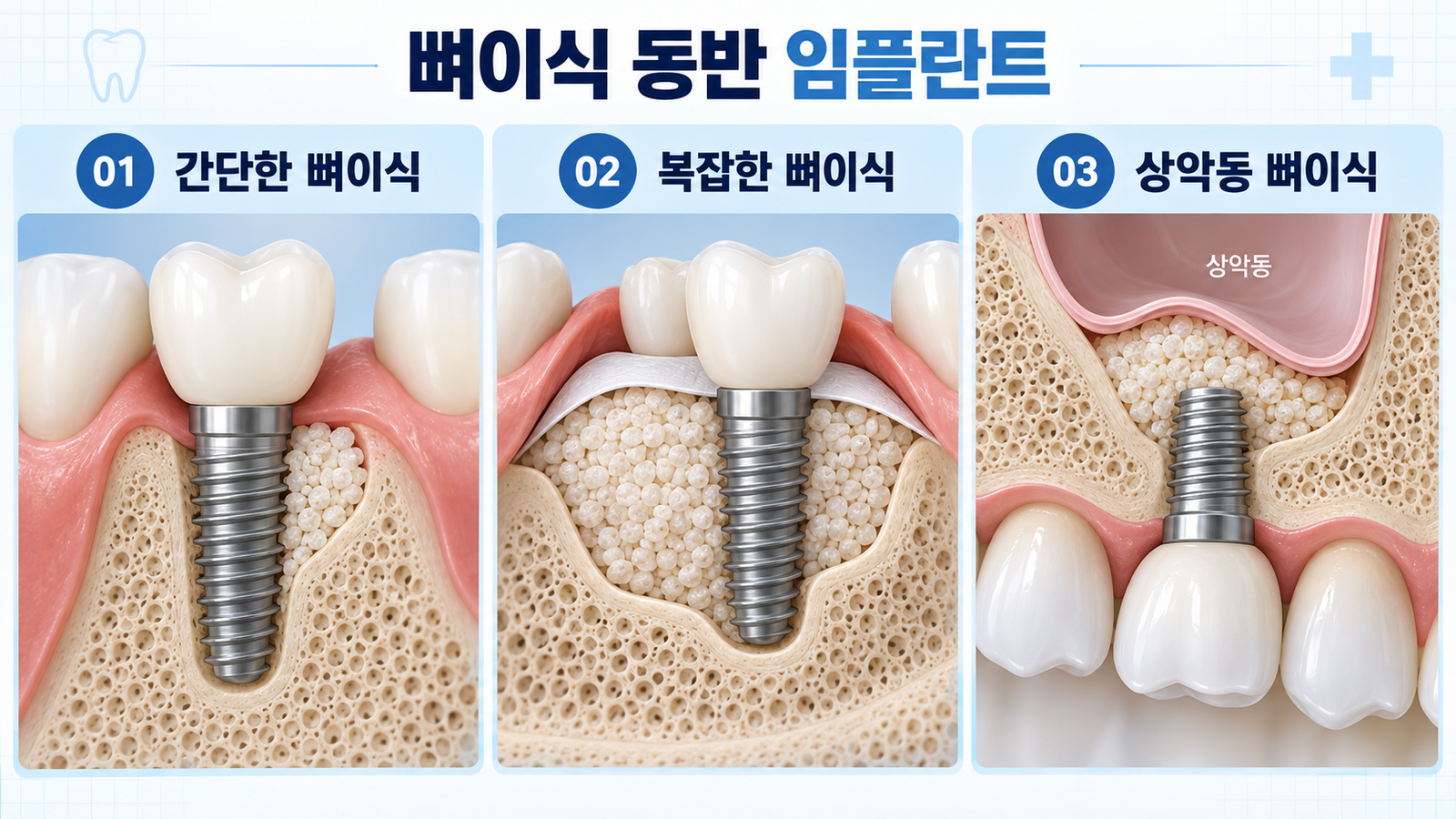
Types of bone grafts — simple graft · complex graft · sinus graft
01. Why Is a Bone Graft Needed?
To place an implant in the jawbone, the amount and condition of the supporting jawbone matters. If bone has resorbed after a long time since extraction, or if the width or height was never enough, a procedure to build up the missing bone may be needed for a stable placement. On the other hand, if a CT scan shows enough bone is already there, treatment can proceed without any graft at all. Needing an implant doesn't automatically mean needing a bone graft.
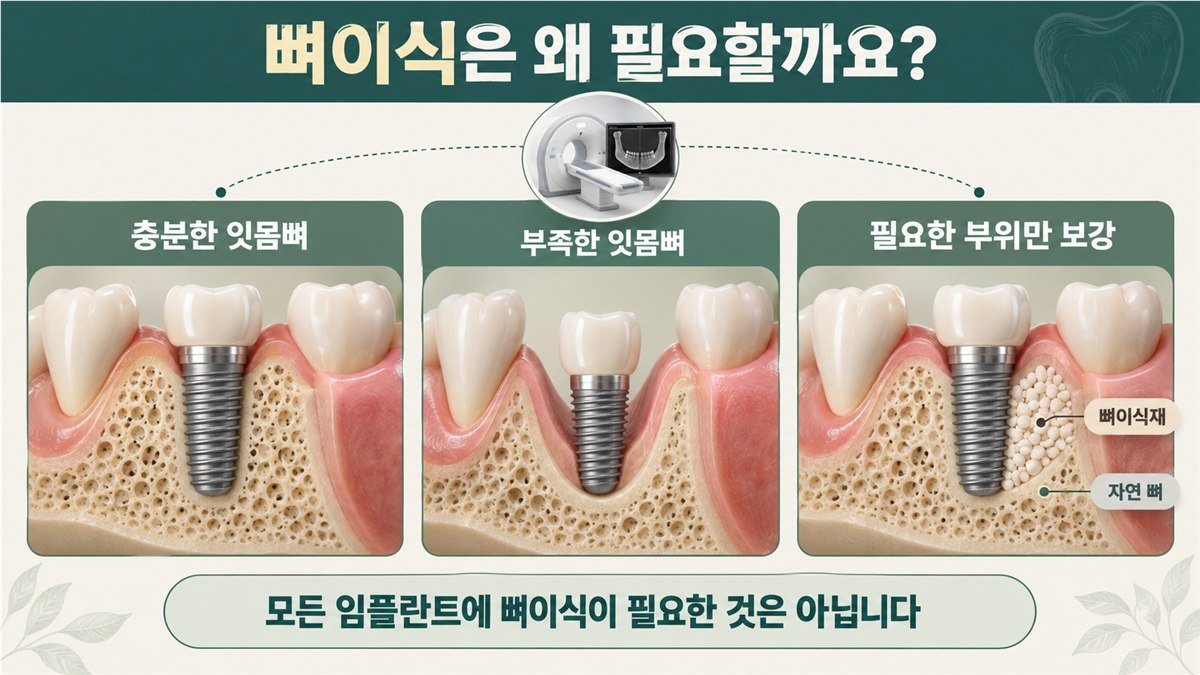
Checking jawbone condition with CT — enough bone · not enough bone · augmenting only where it's needed
02. If Bone Is Lacking, Is a Graft Always Required?
Not necessarily. What matters in the consultation isn't simply whether the bone looks insufficient, but precisely checking the condition at the actual implant site. At Smile Digital Dental Clinic we check bone height, width and shape with CT. We consider grafting where reinforcement is needed, but in cases where natural bone formation can be expected, we sometimes just observe over a period of time instead.
For example, if healing is allowed for about 2-3 months after extraction and a follow-up check shows enough bone has formed, treatment can sometimes proceed without any graft at all. Deciding which areas do and don't need it is based on CT analysis.
03. How Long Does Implant Bone Graft Treatment Take?
After placement, time is needed for osseointegration — the implant fixture bonding stably with the surrounding bone. Add a bone graft, and the time for the grafted site to stabilize also has to be factored in, so overall treatment can take longer.
That said, it's hard to say "a graft adds exactly this many months" as a blanket rule. It varies with the upper or lower jaw, how much bone remains and its condition, the size of the graft, and whether placement can happen at the same time. If a small graft can be done together with placement, the added time may not be much — but if bone has to be grafted first and given time to heal before placement, the whole process can take 6 months or more, and in some cases close to a year.
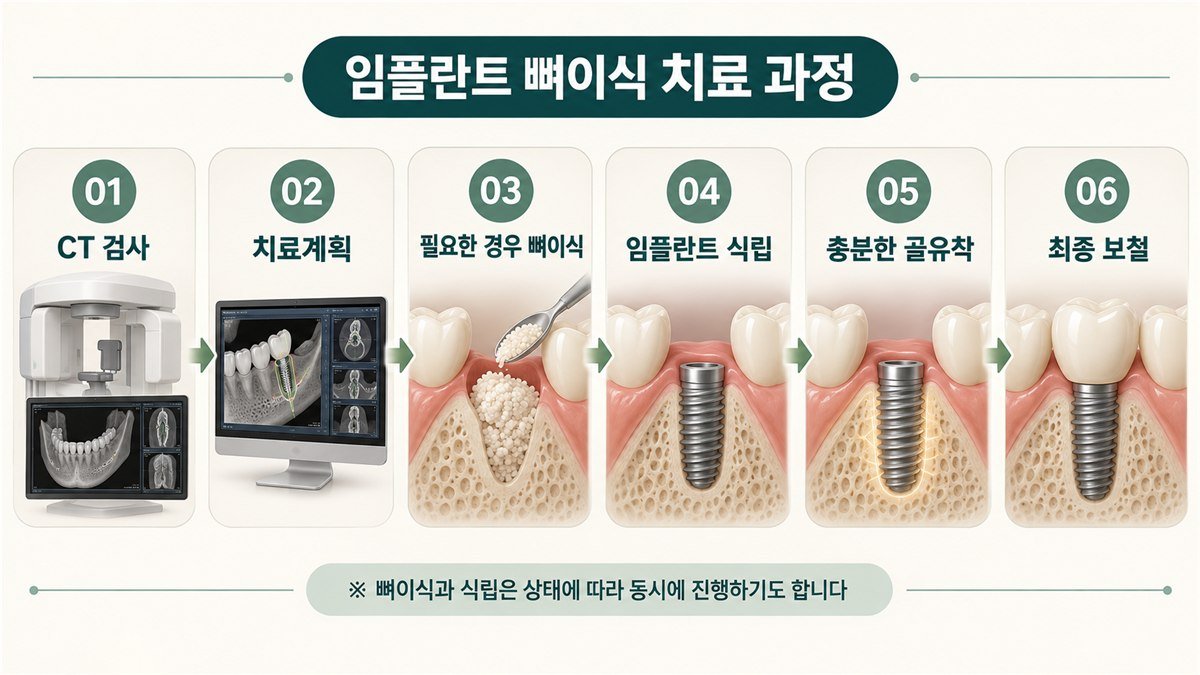
CT exam → treatment plan → bone graft if needed → implant placement → sufficient osseointegration → final restoration (grafting and placement are sometimes done on the same day, depending on the case)
04. Can Grafting and Placement Happen on the Same Day?
If the existing bone can hold an implant stably, the deficient area can be built up and the implant placed at the same time. If bone is significantly lacking, though, the bone is grafted first and given enough healing time before moving to the next stage. So whether it's done at the same time or in stages is decided based on the bone condition seen on CT.
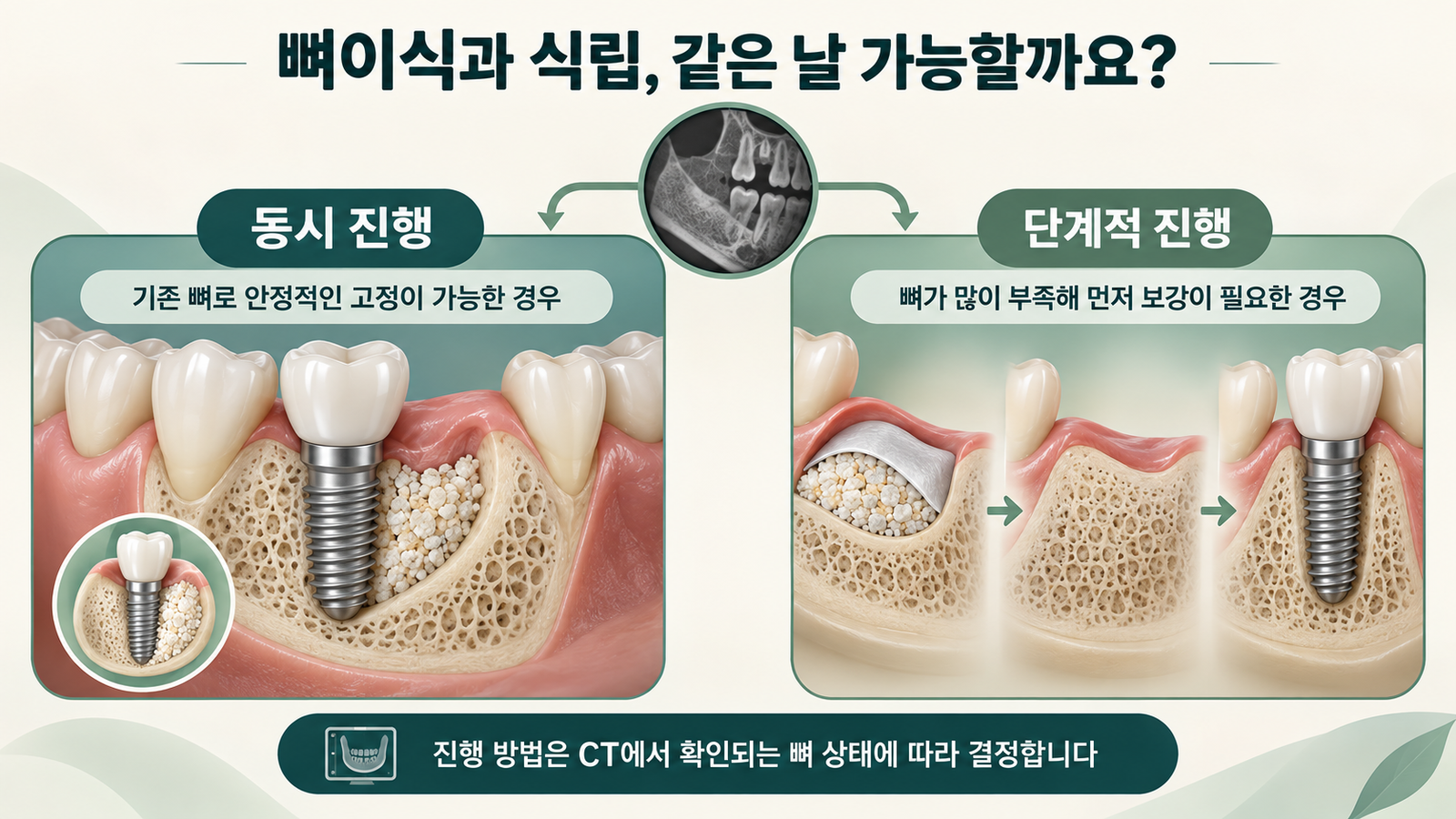
Same-day — when existing bone allows stable fixation / Staged — when bone is significantly lacking and needs reinforcement first
05. Does Going Digital Shorten Treatment Time?
This part is easy to misunderstand. Using digital equipment doesn't shorten the biological time it takes for bone to form or for osseointegration to happen. The time your body needs to heal still has to be given in full.
So what does going digital actually mean? Analyzing CT and digital intraoral scan data together helps plan the implant position, angle and depth in advance, factoring in bone width and height, nearby structures, and even where the final restoration will sit. Where needed, that plan can also be carried out with the help of a computer-analyzed guide, placing the implant at the planned position.
The point of a digital system isn't simply to finish treatment faster. It also means planning treatment with full respect for the osseointegration period your body needs, while still factoring in your bone condition and the position and shape of the tooth that will ultimately be made.
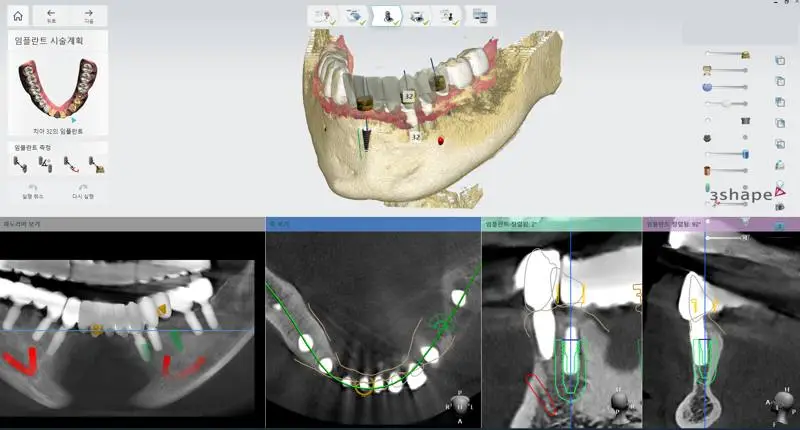
CT and digital data are used to plan the implant position and direction.
06. How Is the Restoration Made After Osseointegration?
Once osseointegration is confirmed, we move to making the final restoration. Smile Digital Dental Clinic uses a 3Shape intraoral scanner, a CAD/CAM system, milling equipment and a 3D printer in the process. Designing the restoration from digital scan data and using in-house equipment helps the fabrication process run efficiently.
That said, this is an advantage at the restoration-fabrication stage after osseointegration — it doesn't mean the biological time for bone to settle in is shortened.
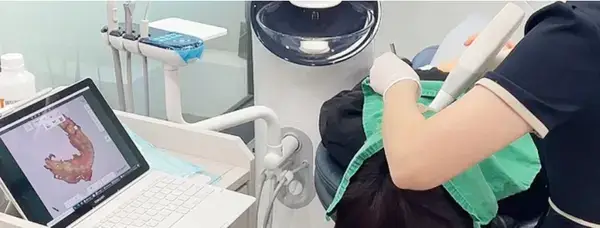
Digital scanning and our in-house CAD/CAM system used in the restoration-making process
07. If You're Considering a Digital Implant Consultation in Busan Seomyeon
Smile Digital Dental Clinic has used CAD/CAM systems in treatment since 2010, after first opening in 2008. Since 2018 it has continued digital care in Busan Seomyeon. Our director holds a DDS/PhD in Dentistry from Pusan National University, and has served for one year each on the faculty of the Department of Periodontics at Baylor College of Dentistry and the Department of Prosthodontics at Texas A&M University.
If you are looking for an implant consultation in Busan or Seomyeon, it is important to review a detailed treatment plan that takes into account your current bone condition, the necessary treatment steps, and the final restoration — not just the cost and treatment period. General information about implant treatment is also available on the Korean Dental Association website as well. The full treatment process is described on the Seomyeon Implants page in more detail.
Frequently Asked Questions
Q. If bone is lacking, do I always need a bone graft?A. No. We check the condition at the actual implant site with CT before deciding whether it's needed. In some cases we wait for natural bone formation and re-evaluate afterward.
Q. Does a bone graft double the treatment time?A. Not necessarily. It depends on whether it can be done at the same time as placement, or whether the bone has to be built up first and the process staged.
Q. With a digital implant, does osseointegration happen faster too?A. Digital equipment doesn't directly shorten the biological time osseointegration takes. Instead, it can be used to plan the implant's position and direction with the bone condition and final restoration in mind.
Q. How can I find out my exact treatment time?A. After checking bone height, width and shape with CT and deciding whether a graft is needed and how placement will proceed, you can be given an expected timeline.
What to Check Before Treatment Time
When bone is lacking, it helps to look at the whole process rather than just asking "how many months will this take?"
CT check → decide if a bone graft is needed → decide placement method → sufficient osseointegration → final restorationIn particular, the point of the digital approach isn't to force the biological healing time shorter — it's to plan placement at a position that respects both your bone condition and the final restoration, while still keeping to a proper healing period.
For the whole process from implant planning and guide fabrication to placement, see the digital implant page.
For examples of bone grafting and treatment time in full-arch implants, see the full-arch implant page.
This post is intended to provide general information about implants and bone grafting. It does not guarantee the outcome of any particular procedure, and the actual treatment method and duration can vary depending on individual oral condition, bone condition and the scope of treatment. Please consult with our clinical staff for an accurate assessment.
What is needed to know the bone graft implant treatment period accurately?
To explain the implant bone graft treatment period accurately, we first need to check the height, width and shape of the bone on a CT scan. Even with the same bone graft, the healing time needed differs depending on how much bone is missing, where it is and which graft material is used, so it is difficult to apply the case of another patient as it is. General health such as smoking or diabetes and the health of the gums can also affect healing, so we check these together in the consultation. After the examination, we explain the whole treatment process step by step.
Things to know during the treatment period
During the implant bone graft treatment period, it is important to check the condition at the scheduled times. If you feel any discomfort during healing, please contact us regardless of the schedule. Whether a temporary tooth is used, and how it is managed, may also change as healing progresses. Our principle is to explain honestly at the first consultation how long the schedule may become and why.