
Digital Implants in Busan Seomyeon: From Computer Analysis to Guided Surgery
We precisely analyze the scan data by computer, from 3D simulation through surgical guide fabrication — planning and carrying out the entire process digitally.
Are computer-analysis implants, guided implants, and navigation implants different treatments?
The wording varies, but all of these terms relate to the digital implant process in which the implant position is planned on a computer from CT and intraoral scan data and then placed using a surgical guide based on that plan; in practice the meanings overlap. At Smile Digital Dental Clinic, the director personally carries out the 3D simulated surgery and guide design. Methods and equipment differ from clinic to clinic.
Intraoral scan and CT scan
The oral structure and bone condition are captured as 3D data. Done with a scanner rather than silicone impression material, so it is easier on the patient.
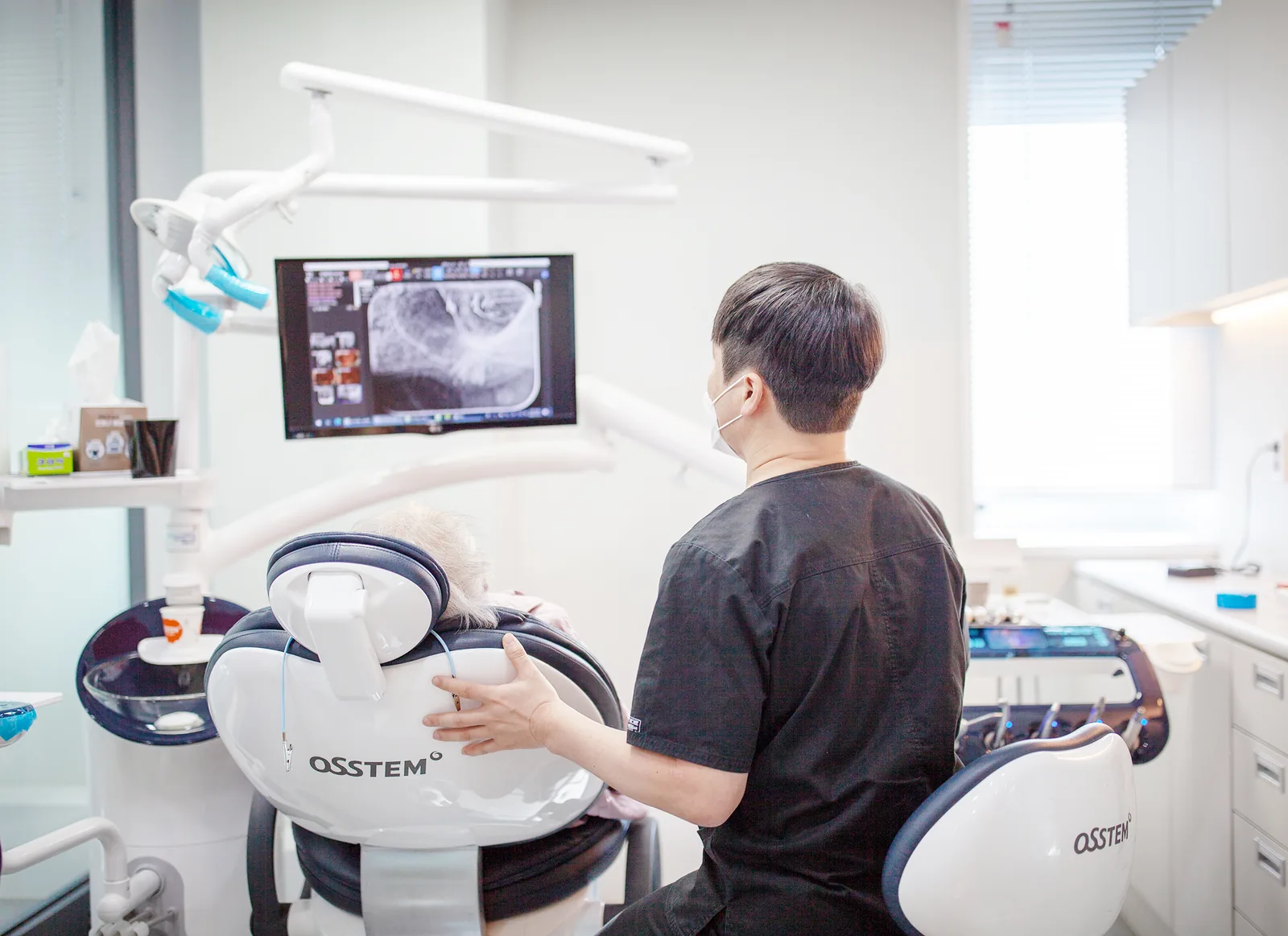
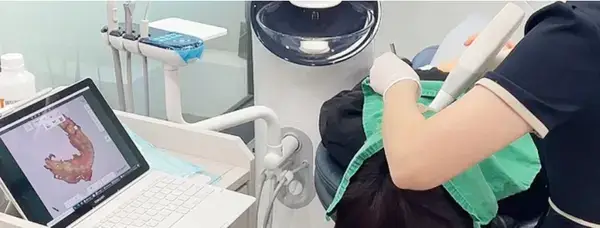
3Shape intraoral scanner
CT data registration
Done by scan alone, no impression material
The scan data goes straight into the design
Computer-Analyzed 3D Guide Fabrication
The planned position, angle and depth are simulated in advance, and a patient-specific surgical guide is then 3D-printed from that plan.
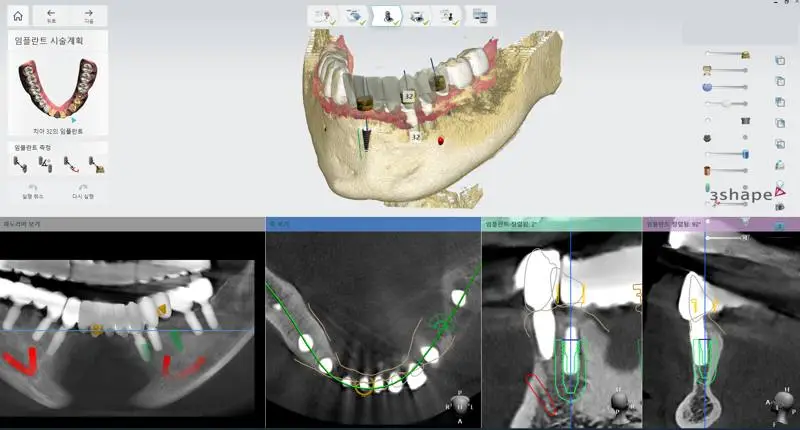
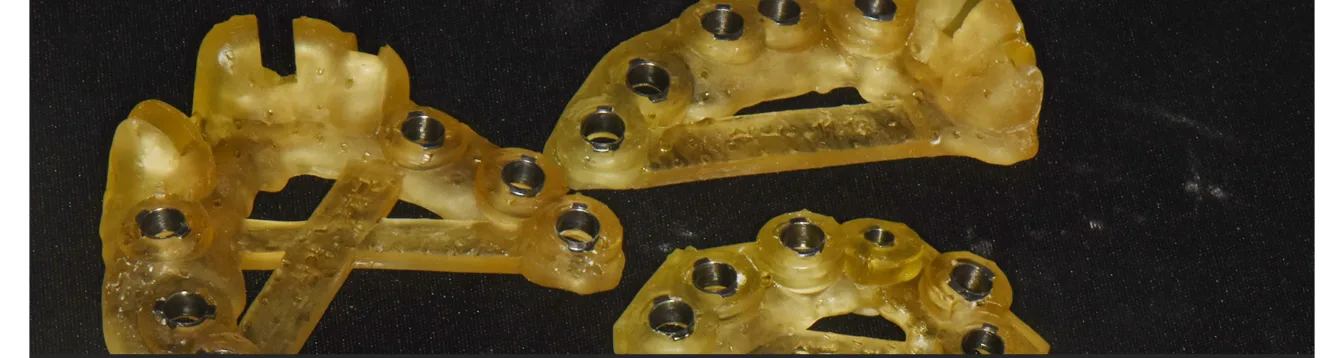
The 3D rehearsal, the surgical plan, the guide and the placement itself are all handled by the director.
Narrows the gap between planned and actual position
Temporary crown made in our lab right after surgery
Function and appearance finished with the final restoration in-house
Guided Digital Implant Placement
The implant is placed at the planned position using the fabricated guide. Depending on the case, a temporary tooth may even be placed on the day of surgery. For frequently asked questions about guided surgery and same-day restorations, see the guided surgery & same-day restoration FAQ.
A site close to the nerve canal, where the margin for error is small
Thin bone that needs the position judged carefully
Several implants to be placed at once
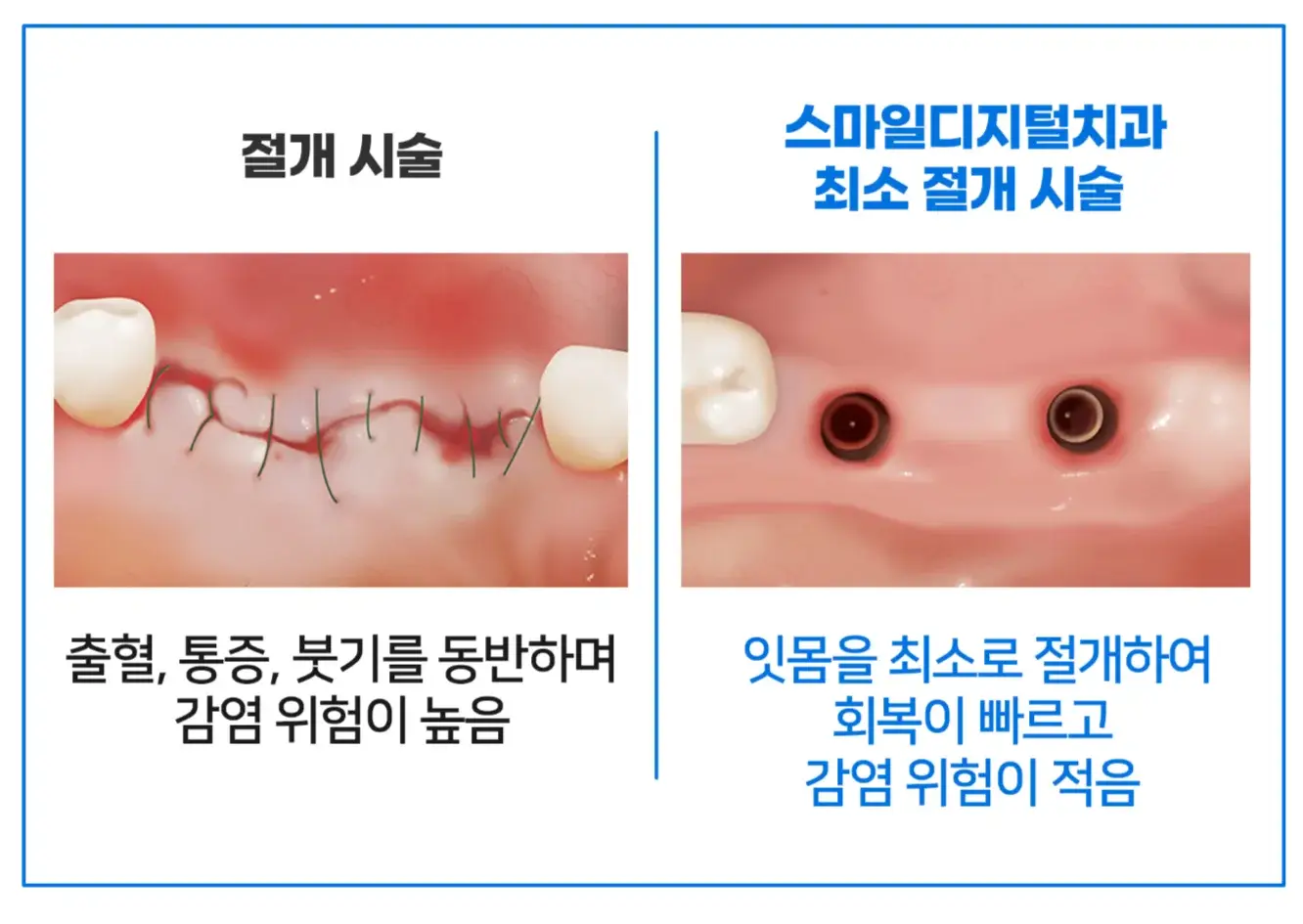
Because the guide fixes the position, the implant goes in through a small opening instead of a wide flap.
Minimal gum incision, so recovery is quicker
Lower risk of infection
Less bleeding and swelling than flap surgery
Can digital guides also be used for full-arch treatment that needs multiple implants?
Yes. For full-arch treatment that needs multiple implants as well, we plan in advance, from CT and intraoral scan data, where the final restoration will sit, and use a surgical guide to align implant positions and directions. For the details of full-arch implants, including temporary teeth, bone grafting, and treatment time, see the full-arch implant page for an explanation.
If you would like a consultation near Seomyeon Station, see the Seomyeon implant pagehas details on our 3D guided surgery.
This post is for information about treatment methods, and results and duration may vary depending on each person's oral condition.
Frequently Asked Questions
Q. When does a guided implant help?
A. Advance planning plays a large role in spots close to the nerve canal, where the bone is thin and placement must be done carefully, and in full-arch cases where many implants are placed at once. Whether it applies is decided after an examination.
Q. Do you make a large incision in the gums?
A. Because the position is set by the guide, in some cases the implant is placed through a small opening without opening the gums widely. The extent of the incision depends on the condition of the bone.
Q. What does the computer analysis examine?
A. We overlay the amount and shape of bone and the nerve canal position seen on CT with the tooth and gum shapes from the intraoral scan to plan the implant position, angle, and depth.
Q. Is a full-arch (full-mouth) implant also possible?
A. We have treated cases from a single tooth to full-arch implants, and in some cases we complete even a temporary tooth on the day of placement. Feasibility and timing vary with each person's condition.
Q. How long does treatment take?
A. The placement surgery takes roughly 30 minutes to 1 hour, and including the osseointegration period it usually takes 3–5 visits. This varies with factors such as whether bone grafting is needed, so we will advise you after an examination. To see why costs differ between clinics, see the implant price differences post for details.
Q. Can I get an implant placed at another clinic evaluated?
A. Yes. If you have records from the previous clinic we will refer to them, and even without them you can have new tests done. For how the cause is checked before revision surgery, see the revision surgery post for details.
Related pages
Cases page — see actual treatment cases.
Our doctor — Dr. Lee Geun-ho, his training and approach to care.
same-day crowns and one-day restorations — the modelless prosthetic process.