
Is implant revision surgery always necessary?
Implant revision surgery is not a treatment decided right away just because an implant feels loose or painful. We first check whether the cause is gum inflammation, a problem with the restoration or the condition of the bone, and then judge whether revision surgery is needed. Depending on the situation, some cases are handled with care or restoration adjustments alone, without revision surgery.
How to inquire about an implant revision surgery consultation
If you are worried about implant revision surgery, it helps to organize when the symptoms began, when and where the implant was first placed, and any X-rays you have. Smile Digital Dental Clinic in Busan Seomyeon will explain the possible options after an examination; treatment methods and duration vary by individual.
In short, even if you are considering implant revision surgery, the first step is not to decide whether to place a new implant right away, but to find out why the symptoms occurred. Even the same symptom can call for very different treatment depending on its cause.
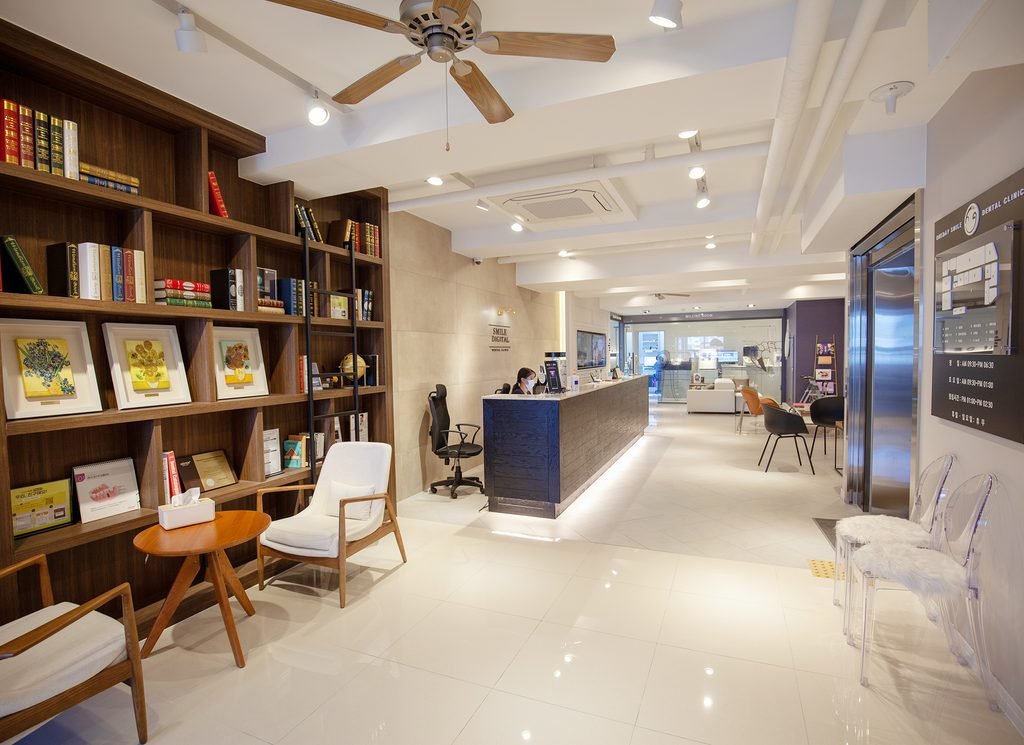
What symptoms appear when there is a problem with an implant?
Typical signs include a loose feeling or pain when chewing, swollen or bleeding gums, and a restoration that feels loose. Having these symptoms does not necessarily mean revision surgery is needed; depending on the condition, some cases are resolved with a relatively simple procedure.
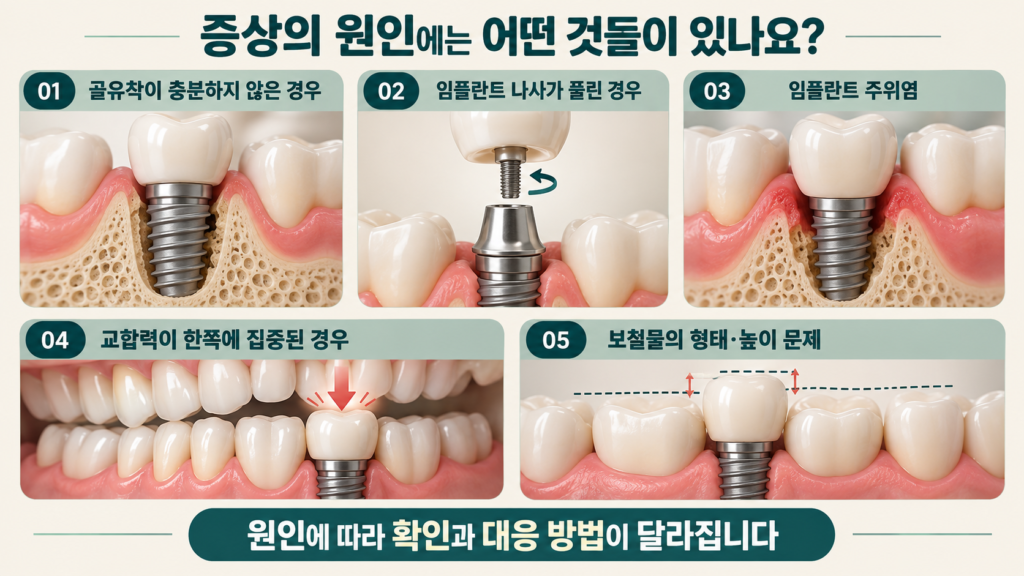
What can cause these symptoms?
The generally known causes are as follows.
- The implant and bone did not bond sufficiently (osseointegration did not occur)
- The screw that secures the implant and the restoration has come loose
- Inflammation has developed in the gums and bone around the implant (peri-implantitis)
- The way the upper and lower teeth meet (occlusion) is overly concentrated on one side
- There is a problem with the shape or height of the restoration
Because the causes differ, the response differs too. A loosened screw and advanced inflammation cannot be approached in the same way.
How is the cause identified?
It is common to make a judgment by combining several tests rather than relying on a single one.
- Imaging (X-ray, CT): checks the condition of the surrounding bone, the extent of any bone loss, and the position of the implant.
- Clinical examination: directly checks the degree of mobility, gum bleeding and inflammation, and the condition of the restoration.
- Bite (occlusion) examination: checks whether chewing force is overly concentrated on a particular implant.
X-rays alone cannot reveal everything, so the X-ray and clinical examination results are considered together.
What treatment options are there once the cause is confirmed?
Depending on the cause, it may be resolved by something as simple as re-tightening the screw or adjusting the bite; in other cases the inflammation must be treated first, and depending on the condition, the implant may need to be removed and placed again.
Even when removal is needed, whether a new implant can be placed right away is decided by considering the amount and shape of the remaining bone, the inflammation status, and whether initial stability can be achieved. This is possible in some cases but not all, and whether bone grafting is needed, and how extensive it would be, is determined individually after reviewing the test results. Healing time also varies greatly between people and sites, so we will advise you after the examination.
What should I prepare before going for a consultation?
- If you have treatment records or radiographs from the clinic where you were previously treated, please bring them for reference.
- It helps to jot down when the discomfort began and in what situations it occurs.
- Please also tell us about any medications you are taking or conditions you have.
Even without records, you can visit and have new tests done. For general information about the process, see the Seomyeon Implants page as well.
How does Smile Digital Dental Clinic approach this?
Our clinic has been treating patients in Busan Seomyeon since 2018, and at the re-diagnosis stage we first spend time identifying the cause through imaging, clinical, and bite examinations. If a new restoration is judged necessary, we can continue by designing and fabricating it with a 3Shape intraoral scanner and in-house equipment. This equipment is used not to diagnose the cause, but at the stage after diagnosis when the restoration is remade.
I hold a Doctor of Dental Science degree from Pusan National University School of Dentistry, and have served one year each as a faculty member in the Department of Periodontics at Baylor College of Dentistry and the Department of Prosthodontics at Texas A&M University. This background does not guarantee any outcome, and the treatment plan may vary depending on your individual condition. For general information about implant treatment, see the Korean Dental Association website as well.
What should I keep in mind when considering implant revision surgery?
Implant revision surgery cannot be planned before the cause is identified. Whether implant revision surgery is needed, and by which method, depends on the examination results, and regular care needs to continue even after implant revision surgery. If you are worried about implant revision surgery, please first have your current condition checked at a consultation.
Frequently Asked Questions
Q. If an implant feels loose, does it always need to be re-operated?
A. Not necessarily. Some cases, such as a loosened screw, can be resolved relatively simply, so the right order is to identify the cause first.
Q. Can a new implant be placed on the same day the old one is removed?
A. It is possible in some cases but not all. We decide after checking the condition of the remaining bone, the presence of inflammation, and whether initial stability can be achieved.
Q. Can I get an implant placed at another clinic evaluated?
A. Yes. If you have records from the previous clinic we will refer to them, and even without them you can have new tests done.
Q. Can I just have a consultation first?
A. Yes. Call us at 051-808-7528 and we will help arrange a time.
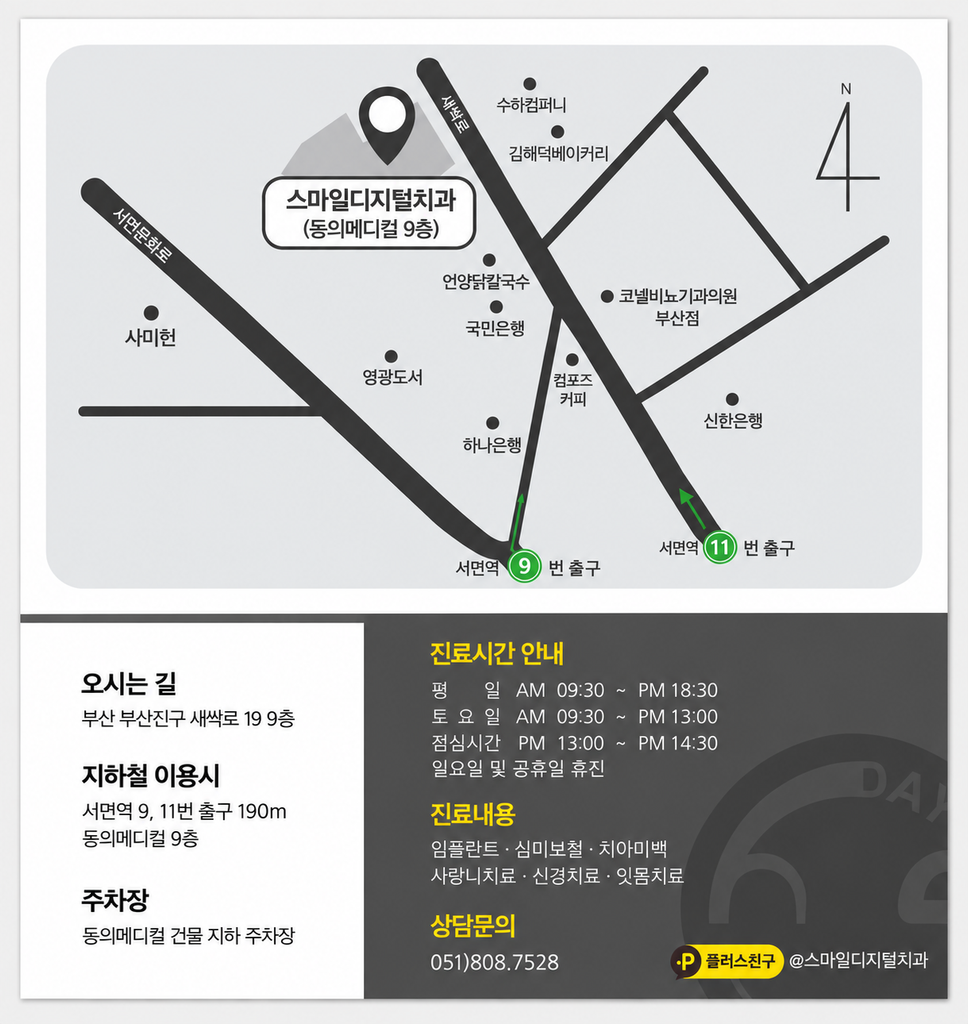
Smile Digital Dental Clinic is located on the 9th floor, 19 Saessak-ro, Busanjin-gu, Busan (about 190 m, a 3-4 minute walk from Exit 9 of Seomyeon Station), and you can reach us at 051-808-7528.
For the whole process from implant planning and guide fabrication to placement, see the digital implant page.
This post is for informational purposes only and does not guarantee the effect or outcome of any particular procedure. Treatment plans and duration may vary depending on each individual's oral condition.