
In short, a computer-analyzed implant is an approach in which the data from a CT scan and an intraoral scan is analyzed on a computer beforehand, so that the position, angle and depth of the implant are planned before surgery. However, this approach does not replace diagnosis or the clinician's judgment, so what matters more is what data the plan is based on, who makes it, and how it is carried into the surgery.
What is a computer-analyzed implant?
Simply put, it is an implant approach in which the amount and shape of the bone and the positions of nerves and blood vessels are checked in 3D data before surgery, and the placement plan is worked out in advance. Depending on the clinic it may also be called a navigation implant or a digital guided implant. These terms are often used to mean the same thing, but the details of the method can differ from clinic to clinic.
The key point is that the plan is designed before the surgery begins. In many cases, the plan is turned into a surgical guide and used during the actual procedure.
How does it differ from conventional implant planning?
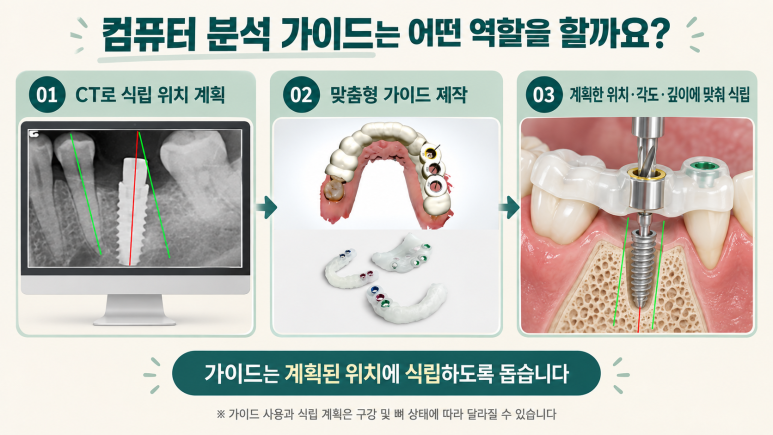
The computer-planned, guide-assisted approach described here combines CT and intraoral scan data to plan implant position, angle and depth with the final restoration in mind. This plan is then used to fabricate a surgical guide.
That does not mean other approaches are inaccurate. Whichever method is used, it is based on a diagnostic process that considers the patient's overall oral condition.
What is the order of a computer-analyzed implant procedure?
It varies from clinic to clinic, but it generally follows the flow below.
- CT scan and intraoral scan: The condition of the bone, gums and teeth is checked as 3D data.
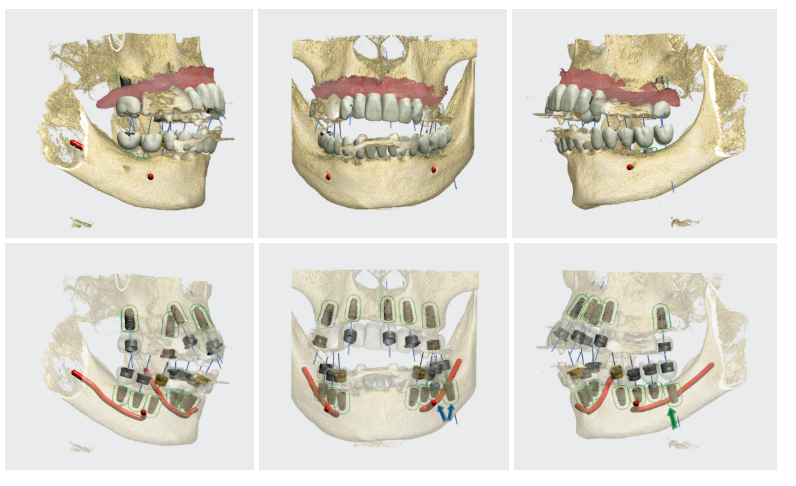
- Designing the placement plan: The two sets of data are overlaid, and the position, angle and depth of the implant are planned together with the direction of the future prosthesis.
- Making the surgical guide: A guide is made so that the planned position can be referenced during surgery.
- Placement: The surgery is carried out while the plan is compared with the actual condition.
- Post-placement check: An examination confirms whether the implant was placed at the planned position.
The time each step takes depends on the patient's bone condition and the extent of treatment, so it is difficult to give one fixed answer. It is explained individually at the consultation after the examination.
For our workflow from CT and intraoral scanning through surgical guide fabrication, see our Digital and Guided Implants in Seomyeon guide.
What does computer analysis not do for you?
The first thing to point out is that computer analysis is a tool that supports diagnosis; it does not replace diagnosis itself. Specifically, the following remain:
- Diagnosis and treatment-planning judgment: How the data is interpreted and what plan is made is ultimately the clinician's decision.
- Adjustments based on the situation during surgery: When the plan and the actual condition differ, it may be necessary to judge and adjust on the spot.
- Not needed for every case: How it is applied can vary depending on the bone condition and the extent of treatment.
- Radiographic imaging: A CT scan is required to obtain 3D data.
- Individual differences in results: Even with the same method, the course of treatment can vary depending on the condition of the bone and gums and on aftercare habits.
Also, even when a guide is used, it cannot be said that no incision is needed at all. The extent of the incision is decided after checking the condition of the gums and bone.
For consultation topics and treatment timelines when bone grafting is needed, see our Implant Bone Grafting in Seomyeonguide.
What should you check when looking for a clinic?
Rather than the clinic's name or equipment, we suggest paying attention to how it answers the questions below.
- Who makes the placement plan, and with what data
- Where and through what process the surgical guide is made
- How the clinic responds when the plan and the actual condition differ
- How examinations and care continue after surgery
- Whether it explains thoroughly why this approach is, or is not, needed for your condition
You can use these questions as they are, whichever clinic you visit for a consultation. If you are curious about anything, you can also look through the process together on the Seomyeon Implants page.
How is it done at Smile Digital Dental Clinic?
Our clinic has been seeing patients in Seomyeon, Busan since 2018, and every implant is placed using guided surgery with a surgical guide we make ourselves. We obtain oral data with a 3Shape intraoral scanner, design the placement plan together with the CT data, and then make the guide in-house on a 3D printer. The director takes part directly from the planning stage.
For full-arch implant treatment, eligibility for temporary teeth on the day of implant placement depends on bone condition, initial implant stability and the extent of bone grafting. Temporary teeth differ from the final restoration, which follows assessment of healing and osseointegration. For eligibility criteria and actual treatment cases, see our Full-Arch Implants in Seomyeonguide.
The director holds a doctorate in dentistry from Pusan National University and has served as faculty for one year each in the Department of Periodontics at Baylor College of Dentistry and the Department of Prosthodontics at Texas A&M University in the United States. This equipment and experience are meant to support the process of diagnosis and treatment planning, and do not mean that results are guaranteed. For general information about implant treatment, you can also find it on the Korean Dental Association website as well.
For the clinician's background and approach to care, see our Our doctorguide.
For consultation scheduling and directions, see our Appointments and Contactpage.
What should I keep in mind when looking into computer-analyzed implants?
Computer-analyzed implants are a tool that helps make planning more precise, and the same method is not applied to every patient. Even if you choose a computer-analyzed implant, diagnosis and consultation come first, and the result and duration depend on the condition of your mouth. Whether a computer-analyzed implant suits you is decided after an examination.
Frequently Asked Questions
Q. Is a computer-analyzed implant absolutely necessary for every implant?
A. No. The approach that is needed varies with the condition of the bone and the extent of treatment, so it is decided individually after examinations such as a CT scan.
Q. Is it the same as a navigation implant?
A. The name differs from clinic to clinic, and the terms are often used with a similar meaning. However, the details of the process can differ, so we suggest asking directly at the consultation how it is carried out.
Q. If a guide is used, is no incision made at all?
A. That cannot be assumed. The necessary extent is decided after checking the condition of the gums and bone, and depending on the case an incision may be needed.
Q. Can I just have a consultation first?
A. Yes. Call us at 051-808-7528 and we will help arrange a time.
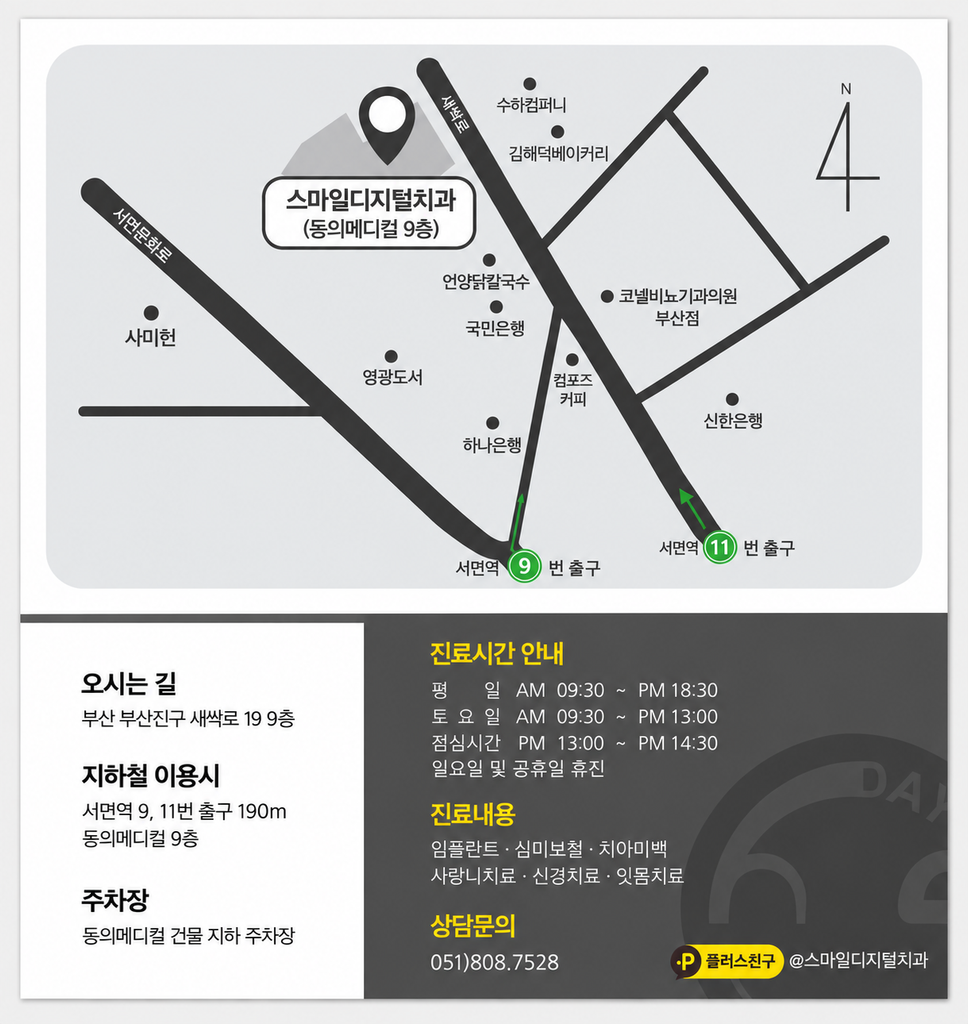
Smile Digital Dental Clinic is located on the 9th floor, 19 Saessak-ro, Busanjin-gu, Busan (about 190 m, a 3-4 minute walk from Exit 9 of Seomyeon Station), and you can reach us at 051-808-7528.
This post is for informational purposes only and does not guarantee the effect or outcome of any particular procedure. Treatment plans and duration may vary depending on each individual's oral condition.