Hello.
This is Smile Digital Dental Clinic 🙂
Some patients have lost many teeth and wear dentures, but because of the discomfort
they start thinking about dental implants.
In such cases, after checking the remaining teeth and the condition of the jawbone, whether the patient has been using dentures,
and the treatment direction the patient prefers, we can compare options such as using a few implants together with a denture
or a fixed restoration supported by implants,
and then make a treatment plan.
Today we introduce the full-arch implant treatment process of a patient in her 70s
who visited us because her existing denture was uncomfortable.
Table of contents
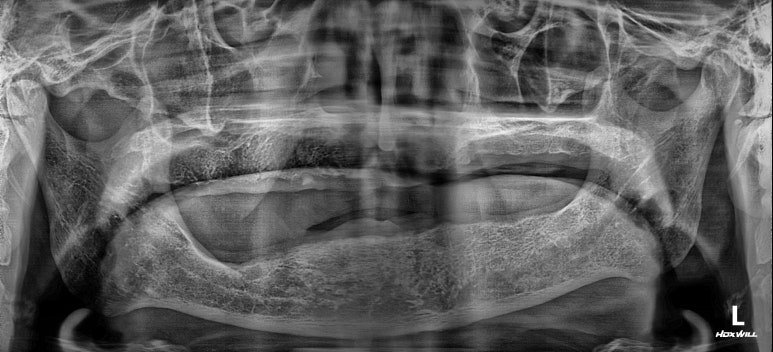
Panoramic X-ray before treatment
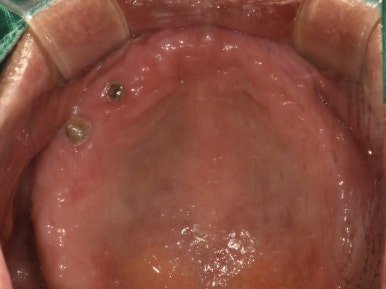
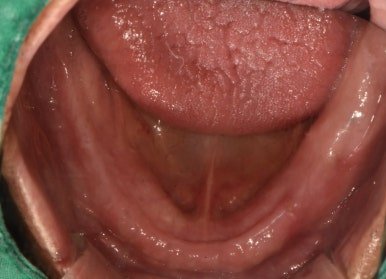
Intraoral photos before treatment
She Visited Because Her Existing Denture Was Uncomfortable
The patient is a woman in her 70s.
About 4 to 5 years ago she had a new denture made, but she found it uncomfortable and said it was hard to use properly..
At the first consultation, because of the cost of full-arch implant treatment,
she was initially considering placing implants in only some areas and using a partial denture.
as her first choice.
After examining her mouth, we explained each option: using a few implants with a denture,
and treating with an implant-supported fixed restoration.
After comparing the treatment methods and processes, she chose
a fixed implant restoration, and we proceeded with full-arch implant treatment.
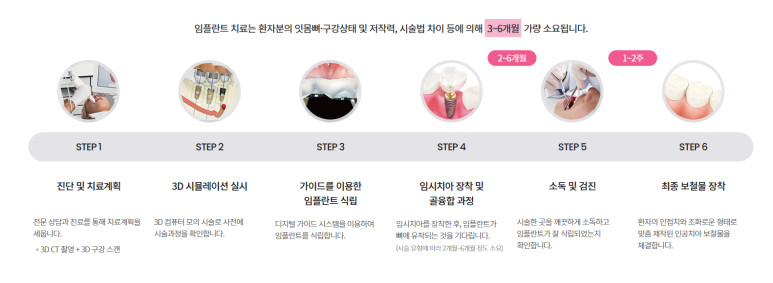
Full-Arch Implants Also Start With a Treatment Plan
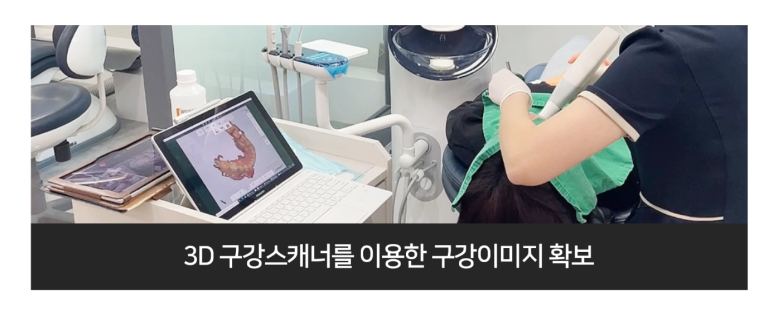
Intraoral scan before treatment
Full-arch implant treatment is not simply placing an implant
in every spot where a tooth is missing.
We check the remaining jawbone and the surrounding anatomy, and consider the position and bite of the teeth that will finally be made,
so that we plan together the position and number of implants needed
and the shape of the restoration.
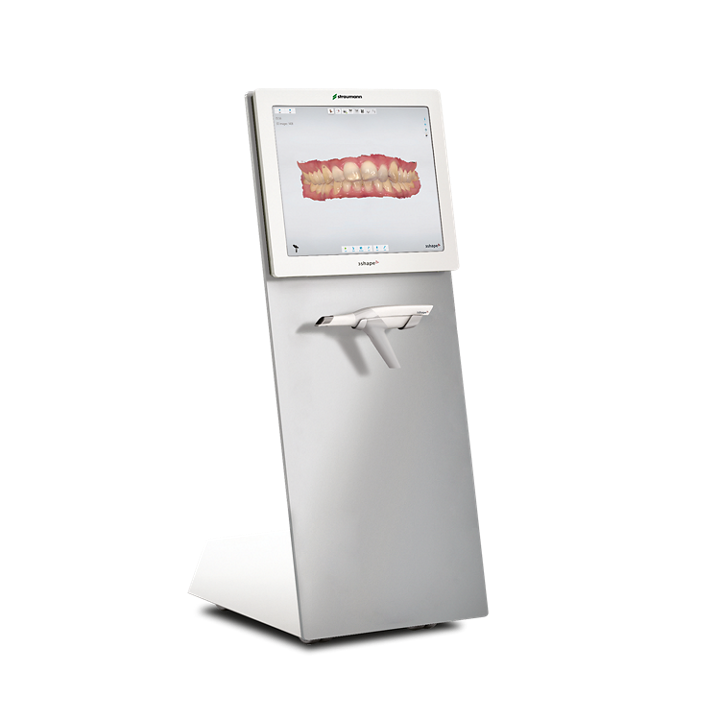
For this patient, we checked her current oral condition using 3D CT and intraoral scan data.
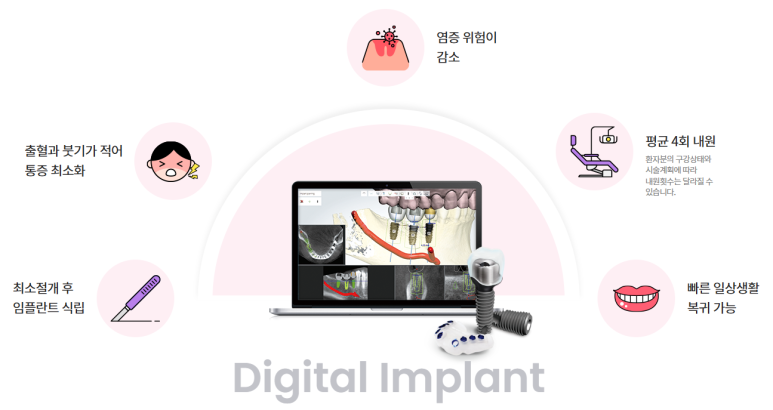
What Is a Digital Implant?
In this case, using CT and intraoral scan data,
we planned the position and direction of the implants on the computer.
On the CT we check the jawbone and surrounding anatomy, and together with the intraoral scan data
we plan implant positions with the final restoration in mind.
At Smile Digital Dental Clinic, based on this data, Dr. Lee Geun-ho personally
plans the implant positions and makes the digital guide used in surgery.
This approach is also commonly called digital implants, guided implants, or navigation implants.
A digital guide is a surgical aid that carries the implant position and direction planned on the computer
into the actual surgery.
However, using digital equipment or a guide does not mean
that there is no error at all in surgery.
During actual surgery, while checking the patient's bone and gum condition and how well the guide fits,
we have to consider the plan and the real situation together.
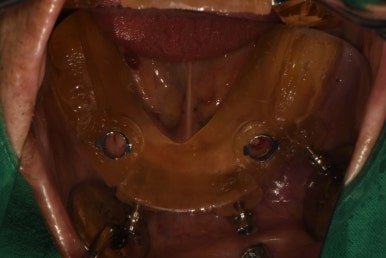
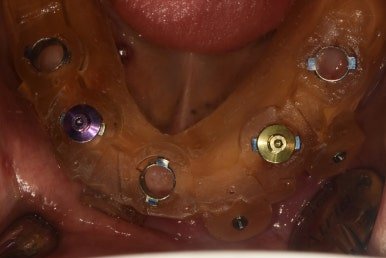
The digital guide fitted in the mouth
We Tried In the Digital Guide Before Surgery
The photos show the digital guide made before surgery fitted in the patient's mouth.
After confirming that the guide sat stably at the planned position,
we performed the implant surgery.
In an earlier post we explained that a digital implant does not require cutting the gum, but
using a digital guide does not mean every surgery is done without an incision.
Depending on the patient's remaining bone, gum condition, and whether bone grafting is needed,
a minimal incision or a gum incision may be necessary.
This case was also carried out according to the plan while checking the actual condition of the surgical site.
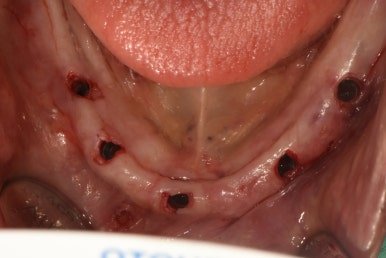
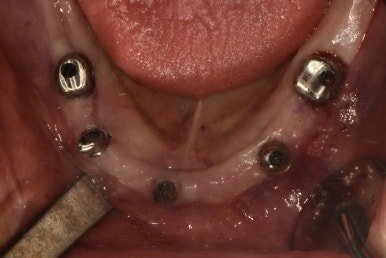
Right after implant surgery
We Placed Temporary Teeth on the Day of Surgery
In full-arch implant treatment, we also have to consider the burden of the period without teeth
until the final restoration is completed after surgery.
For this patient, we planned the temporary restoration in advance using digital data before surgery.
After placing the implants, we checked how firmly they were anchored and the bite,
and placed the temporary restoration on the day of surgery.
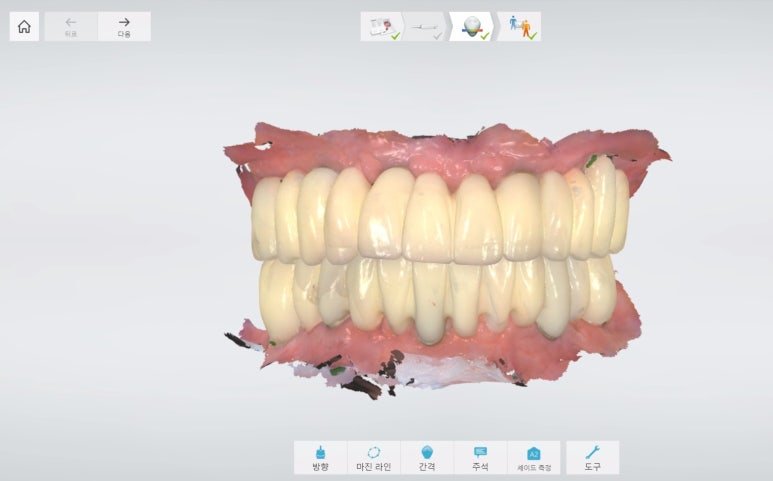
Making the temporary teeth on the day of surgery
However, having full-arch implant surgery does not mean that every patient can receive
fixed temporary teeth on the day of surgery.
This has to be decided after checking several conditions, such as the condition of the remaining bone, the initial stability of the implants, the number and position of implants, whether bone grafting is done,
and the bite.
Also, having temporary teeth in place does not mean that you can chew hard food freely like usual
right after surgery.
While the implants are bonding stably with the bone, care is needed with eating and use
so that excessive force is not applied to the treated area.
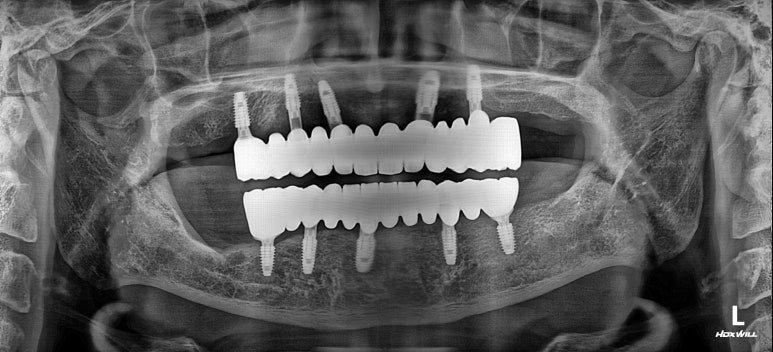
Final implant restoration
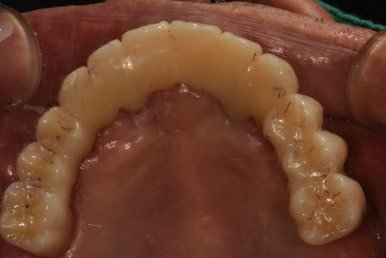
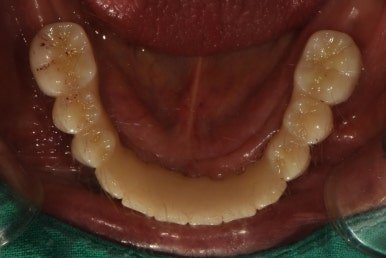
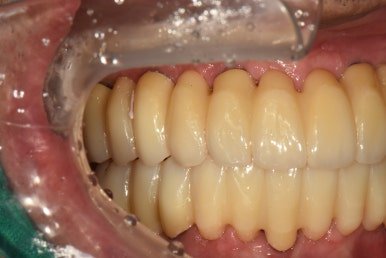
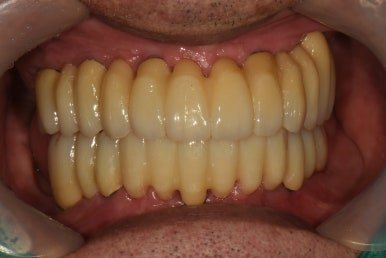
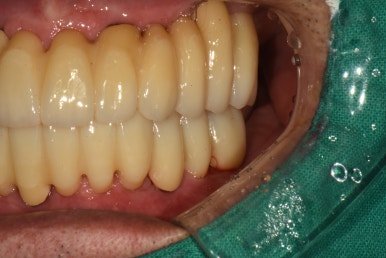
The Final Restoration Was Made About 3 Months Later.
This patient went on to the final restoration stage about 3 months after implant surgery.
This does not mean that full-arch implant treatment is finished in 3 months.
The treatment period can vary with the patient's remaining bone and bone quality, the initial stability of the implants,
whether and how much bone grafting is done, the condition of the upper and lower jaws, and the healing process.
In this case, after checking the treatment process and recovery,
we were able to proceed with the final restoration about 3 months later.
Therefore, rather than simply comparing it with a typical treatment period,
it is more appropriate to see it as this patient's actual course of treatment.
If a Denture Is Uncomfortable, Are Full-Arch Implants the Answer?
Not necessarily.
There is more than one way to treat a patient who has lost many teeth.
Depending on the remaining teeth and the condition of the jawbone, we can consider remaking the denture, using a few implants together with a denture, or planning an implant-supported fixed restoration, among
several other methods.
This patient in her 70s also came in at first thinking about
partial implants and a partial denture.
After the examination, we compared the possible treatment methods and, taking into account the direction she wanted,
chose full-arch implant treatment.
In this treatment we proceeded in this order: treatment planning with CT and intraoral scan → making the digital guide → implant placement → temporary restoration on the day of surgery → follow-up → final restoration about 3 months later.
were carried out in this order.
If you are considering full-arch implants, rather than only checking how many implants are placed and how quickly it is finished,
it is important to also check your current remaining bone and gum condition, the positions and number of implants needed,
whether temporary teeth can be placed, and the plan for the final restoration.
The before-and-after photos in this case were published with the patient's consent.
Implant treatment methods and results vary from person to person. Pain, swelling, bleeding, or infection may occur after surgery, and the treatment method and period may differ depending on the patient's remaining bone and gum condition, general health, and whether bone grafting is done. Whether temporary teeth can be placed on the day of surgery is also decided after checking several conditions, such as the initial stability of the implants and the bite.
Related cases:
Full-Arch Implants in Seomyeon, Busan: Treating a 10-Year Denture Wearer With a Sinus Lift
Full-Arch Implants in Seomyeon, Busan: A Patient From Ulsan With Same-Day Temporary Teeth
Full Implants With a Digital Guide in Busan Seomyeon: A Case of a Man in His 70s
Related information: Full-Arch Implants in Seomyeon · Same-day crown & one-day restoration guide · General dental information is also available on the Korean Dental Association.