Hello.
From the heart of Seomyeon,
drawing tomorrow's smile,
This is Smile Digital Dental Clinic 🙂
When people hear that several teeth need to be extracted and replaced with implants,
there is one thing many patients worry about.
“Do I have to go without teeth until the implants are completed?”
Especially when several teeth, including the front teeth, have to be treated at the same time,
it is natural to worry about the temporary teeth you will use during the treatment period.
If conditions such as the patient's bone condition and the initial stability of the implants are suitable,
connecting a fixed temporary prosthesis on the day of implant surgery can be considered.
Today I will introduce the treatment process of a man in his 50s who had several teeth extracted, bone grafting and implant placement,
and had temporary teeth connected on the day of surgery.
Table of contents
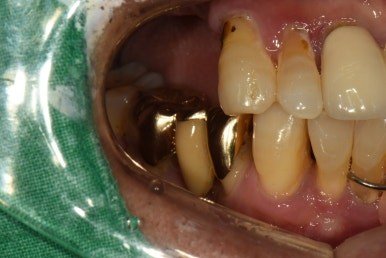
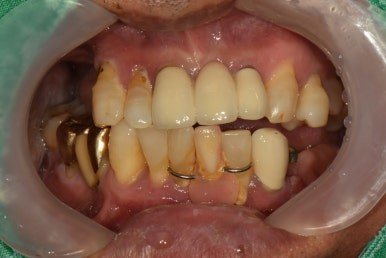
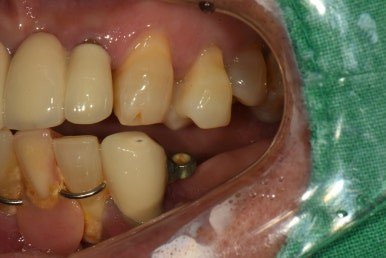
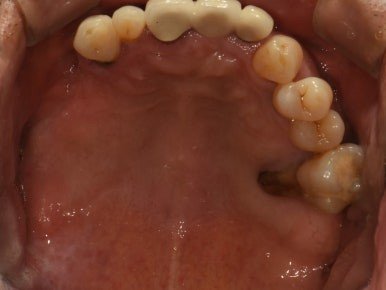
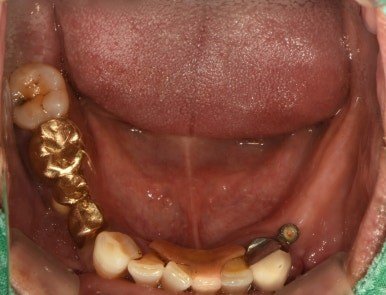
Intraoral photos before treatment
I had no molars on the upper and lower jaws, so eating was uncomfortable
The patient is a man in his 50s.
He had lived for a long time without molars on both sides of the upper and lower jaws, and eating had become very uncomfortable, so he came in for an implant consultation.
The remaining teeth were also not all in good condition.
So rather than simply placing implants only where molars were missing,
we first needed to check which of the current remaining teeth could be kept.
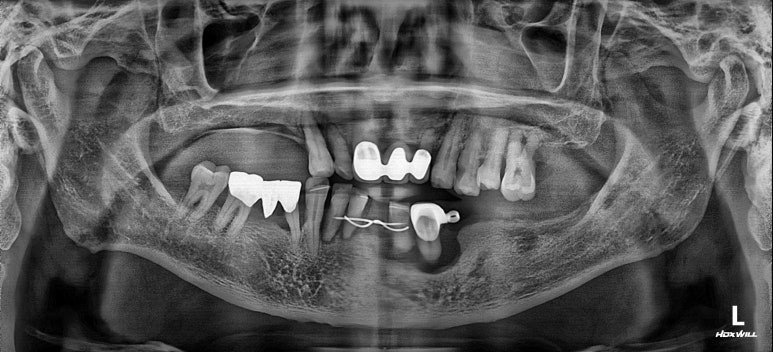
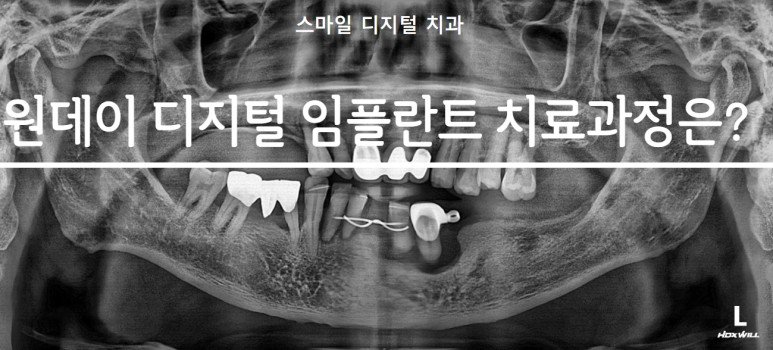
Panoramic X-ray before treatment
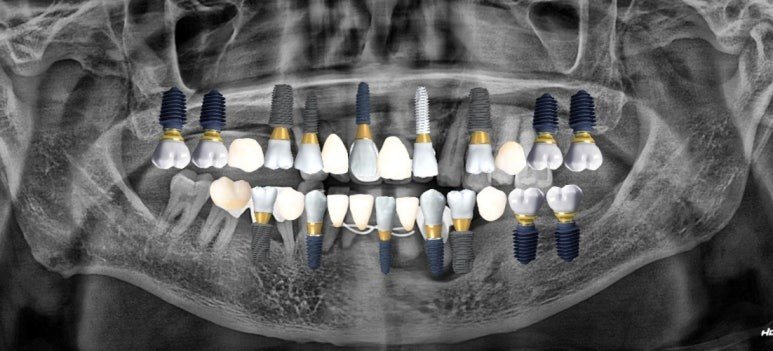
Through the panoramic X-ray, 3D CT and an oral examination, we checked the remaining teeth and the condition of the alveolar bone.
The results showed that some teeth would be difficult to preserve, so we planned their extraction,
and we set the overall treatment plan to keep the teeth judged to be maintainable.
For some areas that needed implants, we also planned bone grafting in consideration of the amount of bone.
How does the surgery proceed?
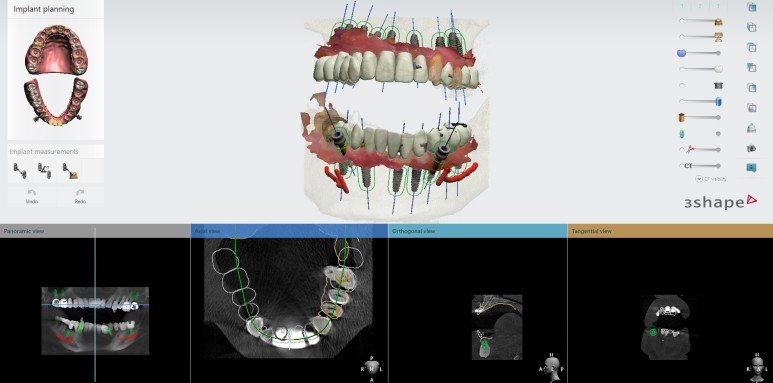
Surgical guide design
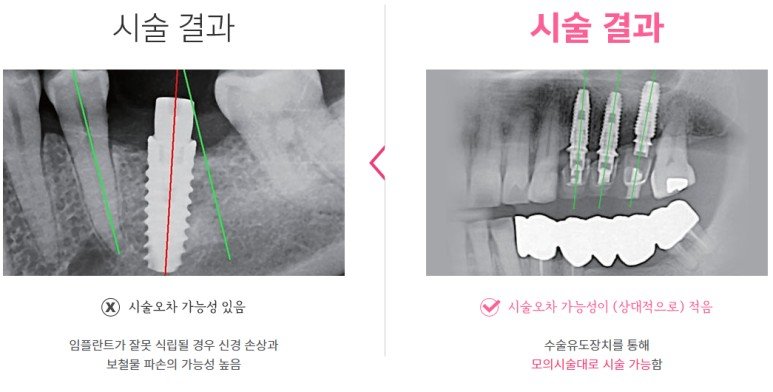
What role does the digital guide play?
A digital guide is a device that helps reflect the position and direction of implants planned from CT and intraoral scans in the actual surgery.
Even in guided surgery, differences can occur between the actual placement position and the plan.
Therefore, we plan by checking the surrounding anatomical structures on CT and allowing an appropriate safety margin,
and it is important to check the patient's bone condition and clinical situation during the actual surgery as well.
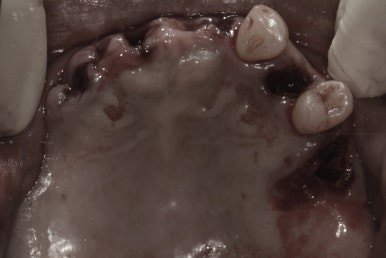
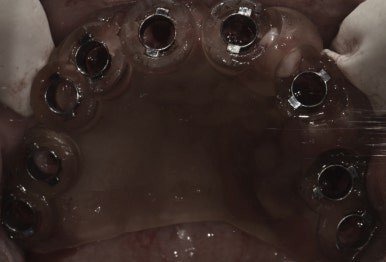
After extraction / With the surgical guide in place
We performed extractions, bone grafting and implant placement
We extracted the teeth judged difficult to preserve and applied the surgical guide at the planned positions
to place the implants.
Bone grafting was also performed where needed.
Depending on the condition of the surgical site, an incision may be needed where extraction or bone grafting is required.
Pain and swelling after surgery can also vary depending on the extent of surgery, whether bone grafting is done,
and the patient's condition.
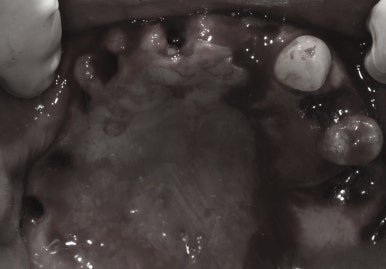
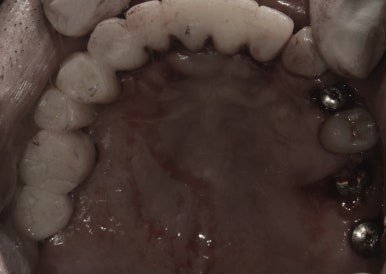
Right after implant placement / Temporary teeth placed on the same day
We connected temporary teeth on the day of surgery
After placing the implants, we checked the initial stability of each implant
and the overall conditions.
As a result, we judged that in this case fixed temporary teeth could be connected on the day of surgery.
This is the core of the one-day implant discussed in this article.
There is something you should not misunderstand here.
One-day implant does not mean that the entire implant treatment is finished in a single day.
In this case, “one day” means that, on the day the extractions and implant surgery were performed,
temporary teeth were connected as well.
After checking the healing of the implants and the surrounding tissue,
the final prosthesis was made as a separate process.
Also, just because a digital guide was used, it does not mean that every patient
can have temporary teeth connected on the same day.
This must be judged comprehensively from the initial stability of the implants, the bone condition, the placement positions and distribution, whether bone grafting is done,
the bite, and the extent of surgery.
Can I eat normally right away once temporary teeth are connected on the same day?
Not necessarily.
Having temporary teeth does not mean that you can chew hard, tough food
as usual right after surgery.
While the implants are healing with the surrounding bone, so that excessive force is not applied to the temporary prosthesis,
you need to adjust the type of food and how you chew, and regularly check the bite and the condition of the temporary teeth.
This patient also had the healing of the implants checked regularly while using the temporary teeth.
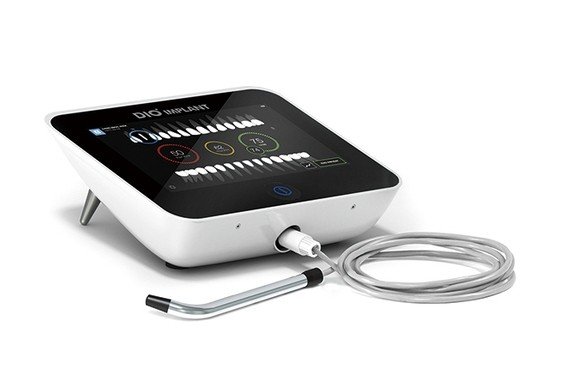
DIO IDx
We checked implant stability by measuring ISQ
During the healing period, through clinical examinations and X-rays, the condition of the implants and surrounding tissue
was checked, and at the necessary points implant stability was measured with a device.
ISQ is a method of expressing implant stability as a number using resonance frequency analysis (RFA)
and checking it.
At Smile Digital Dental Clinic, we use a measured value of 70 or higher as one of the criteria
for deciding whether to proceed with the final prosthesis.
Together with the measured value, we comprehensively check the healing period, clinical condition, X-rays, the placement sites and the bone condition
to decide when to proceed with the final prosthesis.
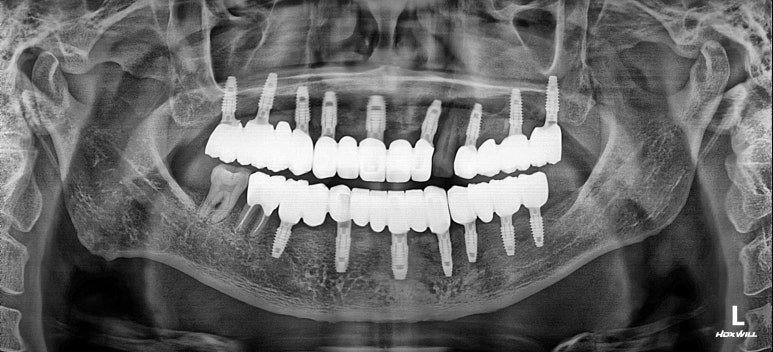
Final panoramic X-ray
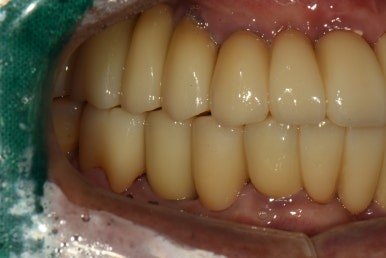
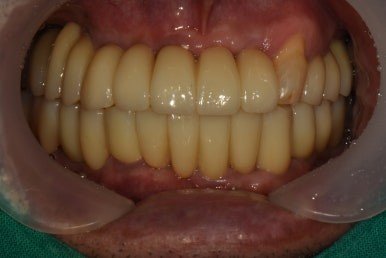
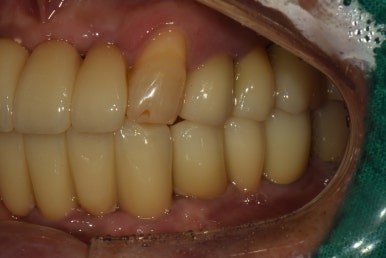
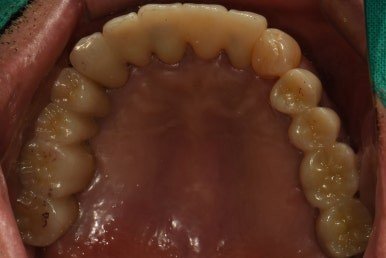
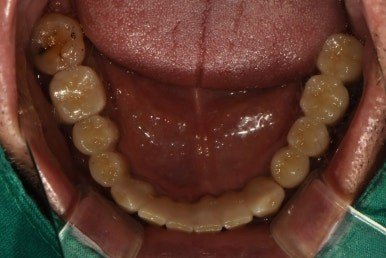
Photos of the final prosthesis
After confirming healing, we made the final prosthesis.
After checking the healing of the implants while using the temporary teeth, we proceeded with the final prosthetic treatment.
In the end, the natural teeth judged to be maintainable were kept, and the areas that needed extraction
and the areas that had no teeth before were restored with implants.
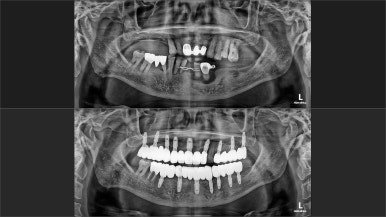
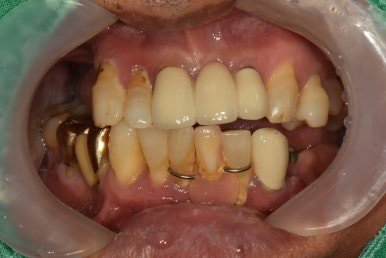
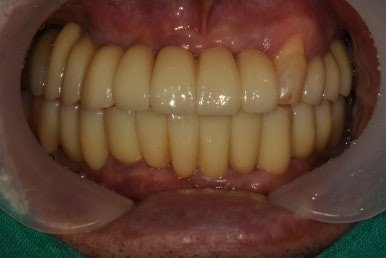
Photos before and after treatment
Before treatment, there were many areas without molars in the upper and lower jaws, and among the remaining teeth some needed
treatment, but after treatment the dental arch was restored with implants and the final prosthesis;
and you can see how they look.
Not every digital implant can be a one-day implant.
In this case, we planned the implant positions with CT and intraoral scans
and made a digital guide.
Then, on the day of surgery, after checking the initial stability of the implants and various conditions,
temporary teeth from the front teeth to the premolar area.
So the treatment process in this case went in the following order:
panoramic X-ray and CT with an oral examination → evaluating which natural teeth can be kept → planning extractions and bone grafting
→ intraoral scan → digital implant planning → making the surgical guide → extractions and implant placement
→ same-day temporary teeth after checking conditions → healing and checking implant stability → final prosthesis
in this order.
Digital implants and one-day implants do not mean the same thing.
Digital technology is a method that can be used for diagnosis and for surgical and prosthetic planning,
and whether temporary teeth can be connected on the day of surgery must be evaluated separately according to each patient's conditions.
If multiple teeth need to be extracted, the temporary teeth plan should be checked too.
When several teeth need to be treated at the same time, what matters to the patient is not only when the final implants
are completed but also what condition they will live in during the treatment period.
Depending on the case, fixed temporary teeth may be used, a temporary denture may be needed,
and in some cases it is difficult to use a temporary prosthesis for a period of time.
Therefore, when planning multiple implants,
it is important to first check which teeth can be preserved, which areas need extraction, whether bone grafting is needed,
whether temporary teeth are possible on the day of surgery, and what process leads up to the final prosthesis,
through CT and an oral examination.
Implants need care even after the final prosthesis.
Implants themselves do not get cavities like natural teeth,
but inflammation can develop in the surrounding tissue.
Also, with long-term use, the screws, crowns and bite of the prosthesis may need to be checked.
Therefore, even after the final prosthesis is completed, oral hygiene care and regular check-ups are important.
Rather than uniformly fixing the check-up interval at 6 months for every patient,
it is better to base it on the periodontal condition, oral hygiene, the condition of the implants and prosthesis, and smoking or systemic risk factors,
and decide accordingly.
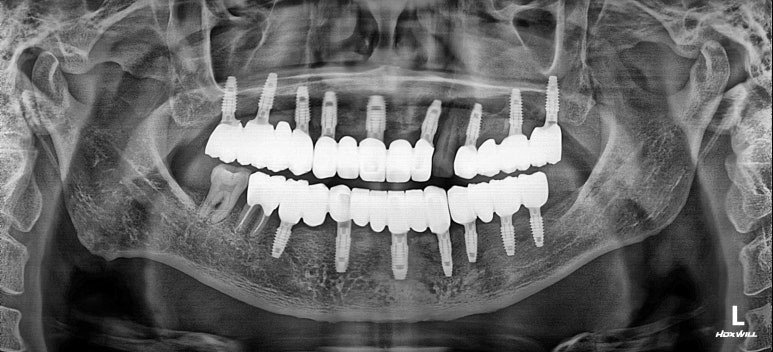
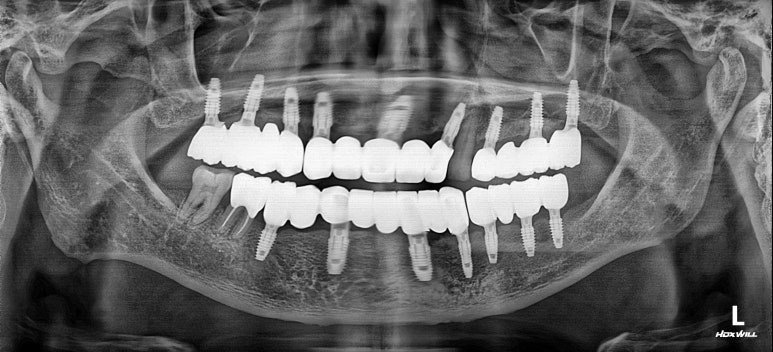
Panoramic X-ray right after surgery / Panoramic X-ray on 2026.07.13
We continue regular check-ups every 6 months after treatment.
Implant treatment does not end once the final prosthesis is placed.
Implants themselves do not get cavities like natural teeth, but in the tissue around the implants
inflammation can develop, and with long-term use changes can also occur in the prosthesis and the bite.
Therefore, regular check-ups and oral hygiene care are important even after treatment.
This patient has also been visiting Smile Digital Dental Clinic about every 6 months after treatment
for regular check-ups.
Even after this case's treatment was completed, we have continued to check progress,
and most recently he came in for a regular check-up on July 13, 2026.
On that day as well, we took a panoramic X-ray to check the implants placed in several areas, the remaining
natural teeth, the surrounding bone tissue and the condition of the prosthesis together.
Because this patient needed multiple extractions of upper and lower teeth and many implant treatments
when treatment first began, we continue to compare changes regularly even after the final prosthesis,
and manage him accordingly.
The photos of the treatment process and before and after treatment in this case are posted with the patient's consent.
Treatment methods and results of implant treatment vary from person to person. Depending on the amount and quality of bone, the condition of the remaining teeth and periodontal tissue, systemic diseases and medications, and smoking, extraction, bone grafting or additional treatment may be needed. Whether temporary teeth can be applied on the day of surgery also depends on various conditions such as the initial stability of the implants, the bone condition, the placement positions and the bite. Pain, swelling, bleeding and infection may occur after implant surgery, and regular check-ups and care are necessary even after treatment.
#BusanOneDayImplant #SeomyeonOneDayImplant #OneDayImplant #BusanDigitalImplant #SeomyeonDigitalImplant #DigitalImplant #BusanGuidedImplant #SeomyeonGuidedImplant #GuidedImplant #NavigationImplant #BusanImplant #SeomyeonImplant #SameDayTemporaryTeeth #ImplantTemporaryTeeth #ImplantBoneGraft #MultipleImplants #SeomyeonDentist #SmileDigitalDental
Related cases:
Full-Arch Implants in Seomyeon, Busan: A Patient From Ulsan With Same-Day Temporary Teeth
Full Implants With a Digital Guide in Busan Seomyeon: A Case of a Man in His 70s
Digital Implant in Seomyeon, Busan: Guided Surgery and Bite Recovery for a 90-Year-Old Patient
Related information: Digital guided implant information · General dental information is also available on the Korean Dental Association.