Hello.
This is Smile Digital Dental Clinic 🙂
People who need cavity treatment but find it hard to visit the clinic many times
“Can an inlay also be done in a single day?”
sometimes ask us this question.
An inlay is a treatment that removes the decay and then restores part of the tooth
with a restoration made to fit the damaged area.
Making a restoration normally takes a separate process, but with an intraoral scanner and
CAD/CAM equipment, depending on the condition of the tooth, an inlay can sometimes be made and placed on the same day as the visit.
Today we introduce the treatment process of a man in his 30s who came because of cavities between his teeth, and had ceramic inlay and resin treatment completed in a single day.
Table of contents
August 7, 2026
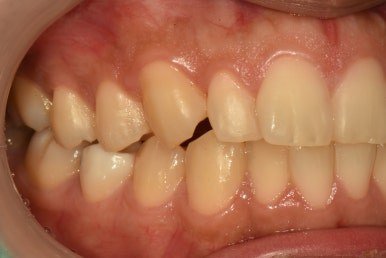
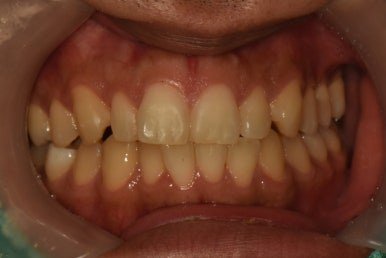
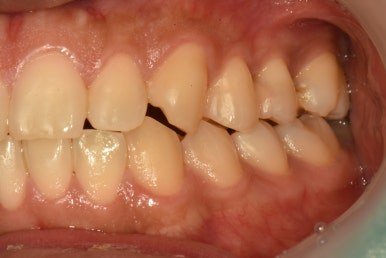
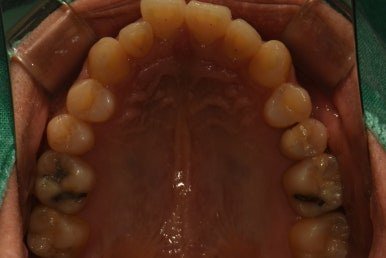
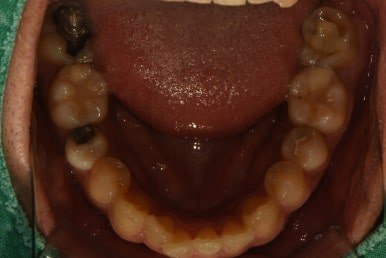
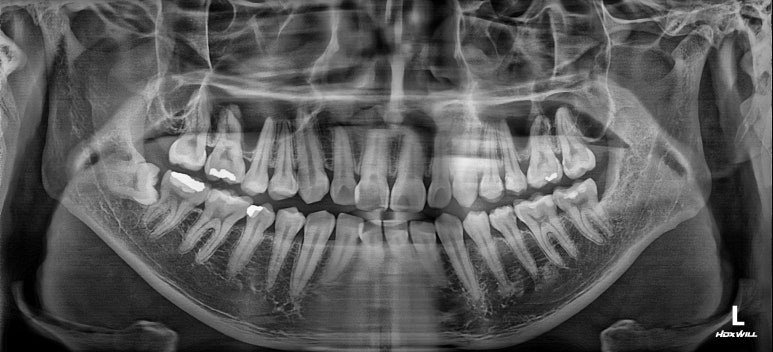
August 7, 2026: Intraoral photos and X-rays before treatment
Cavities Appeared Around Teeth Treated Long Ago
The patient is a man in his 30s.
He came because cavities were suspected again around a tooth that was treated long ago.
The patient wanted to be treated in a single day if possible, rather than visiting several times.
We first examined the upper and lower molars.
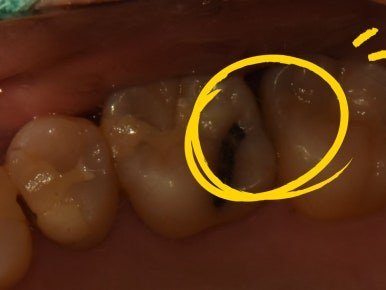
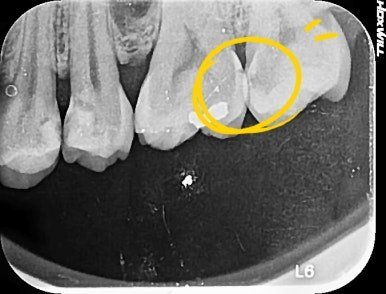
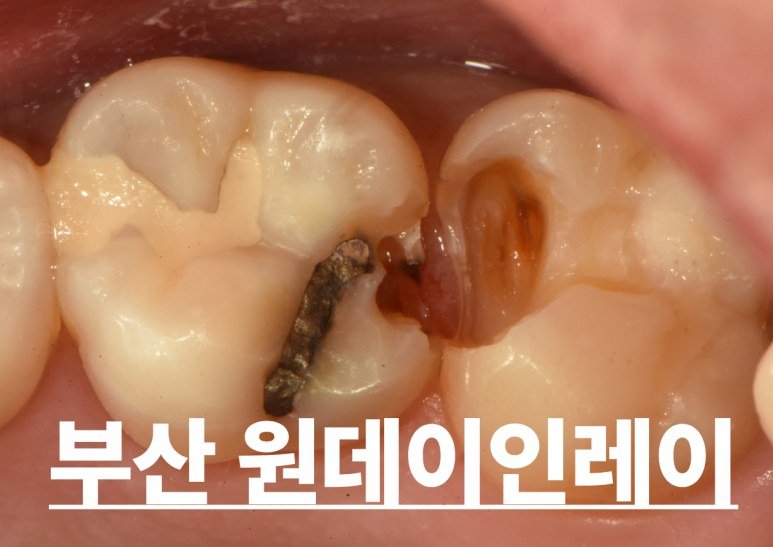
August 7, 2026: Upper left molar before treatment
Cavities Between Teeth May Not Be Easy to See From the Outside.
A cavity had progressed between the upper left molars.
A cavity that starts between the teeth may not look large when seen from the chewing surface,
and may have progressed deep inside.
For this patient as well, we evaluated the location and extent of the cavity
by checking the oral examination together with X-rays.
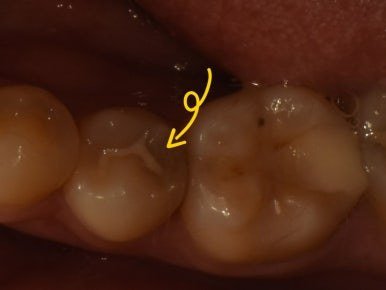
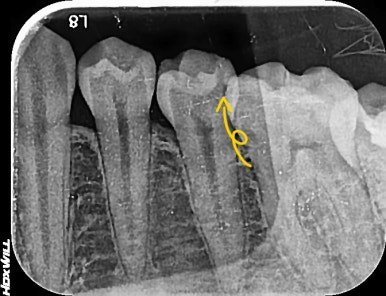
August 7, 2026: Lower left molar before treatment
Cavities between the teeth were also found on the lower left side.
Because it can be difficult to judge the extent of a cavity from the tooth surface alone,
when a cavity between teeth is suspected, it helps to check the oral examination together with
the necessary X-rays.
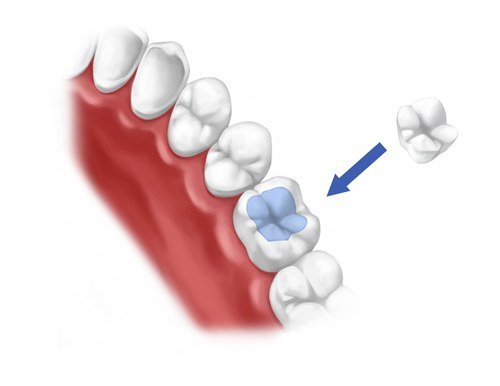
What Kind of Treatment Is an Inlay?
An inlay is a treatment that removes part of a tooth damaged by decay or fracture, and then bonds
a separately made restoration that fits that shape to the tooth.
It can be considered when the cavity is too wide to restore directly with resin, or when
a separately made restoration is judged appropriate to restore the shape of the tooth.
Various materials such as ceramic can be used for inlays, and for this patient we
Ceramic inlay.
We Used Inlays and Resin Differently Depending on the Extent of the Decay
This patient was not treated with the same method for every cavity.
After checking the extent of the decay and the condition of the remaining tooth, we treated separately the areas that needed an inlay and the areas that could be restored with resin.
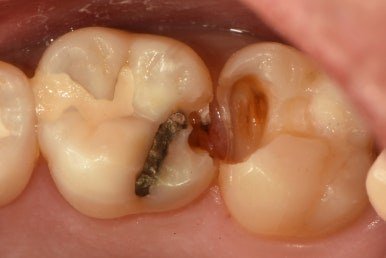
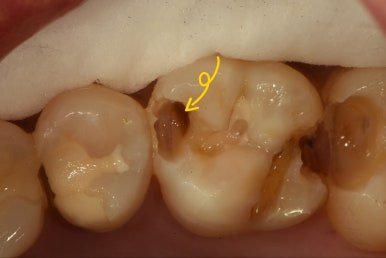
August 7, 2026: Removal of the existing restoration and decay
Upper left molar
First, we removed the decayed area.
Because we needed to check the condition around the existing restoration, we
removed the old material, and additional decay was found beneath it.
After removing the decay, we checked the remaining tooth and the area to be restored, and decided to treat this area
with an inlay.
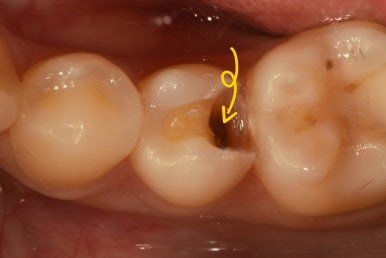
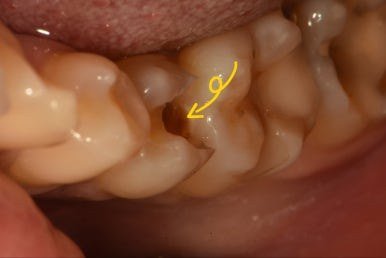
August 7, 2026: Decay removal on the lower side
Lower left molar
While removing the decay of the lower left premolar, we found that the adjacent molar
also had a cavity between the teeth.
For the molar, after checking the extent of the decay and the condition of the remaining tooth,
we judged that the area could be restored with resin, and we carried out resin treatment.
Even when the same patient has several cavities, they are not all treated with the same material or
method.
We choose between resin, inlays and other options after checking the location and extent of each cavity and the amount and shape of the remaining tooth,
and then decide on the treatment method.
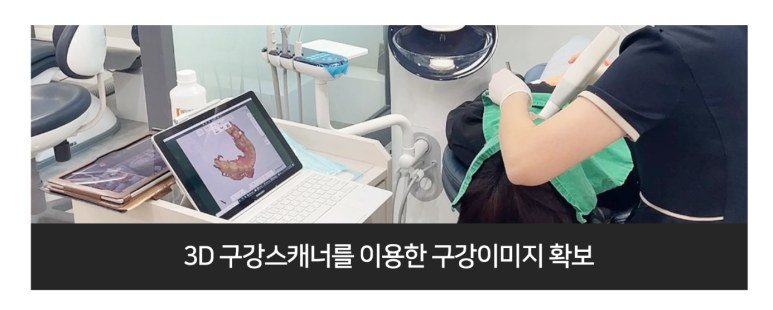
Intraoral scanner in use
We Scanned the Teeth With an Intraoral Scanner Instead of Taking Impressions
After removing the decay and shaping the tooth for the inlay,
we scanned the tooth with the intraoral scanner.
The digital data obtained from the scan is sent to our in-house lab.
In the in-house lab, based on the scanned data of the tooth, we designed the shape of the inlay
using a CAD program.
We design it considering not only a shape that fits the tooth but also
the contact with the adjacent teeth and the chewing surface.
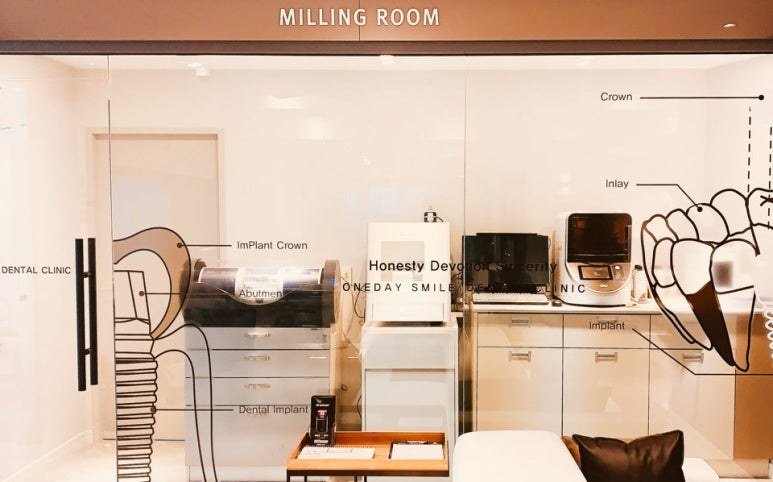
Milling room
We Made the Ceramic Inlay With In-House CAD/CAM
Based on the data designed on the computer, we made the ceramic restoration
using our in-house milling equipment.
At Smile Digital Dental Clinic, we can carry out intraoral scan → CAD design → restoration milling in-house, so in this case we could continue the same-day treatment without sending the restoration to an outside lab and waiting for it to come back.
The advantage of a CAD/CAM system is not simply that it makes things quickly.
The restoration can be designed and made from digital intraoral scan data, and after it is made we check the fit in the mouth, the contact with adjacent teeth, the bite, and so on,
and place it after making the necessary adjustments.
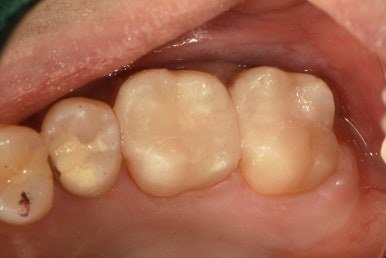
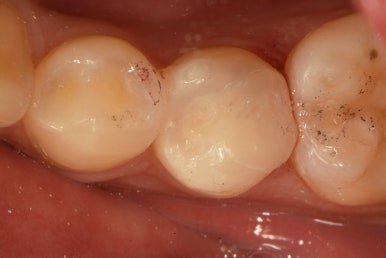
August 7, 2026: After placing the ceramic inlay
We Completed the Ceramic Inlay Treatment in a Single Day
After checking the finished ceramic inlay in the mouth, we bonded it in its final position.
This patient's course was as follows: decay removal → intraoral scan → CAD design → ceramic inlay fabrication
→ checking fit and bite → final placementall on the day of the visit.
Before treatment, cavities were found between the teeth and around the existing restoration,
and after removing the decay, we restored each tooth with a ceramic inlay or resin depending on its condition.
Can All Cavity Treatment Be Finished in One Day?
Not necessarily.
Having CAD/CAM equipment does not mean every cavity can be treated
with a same-day inlay.
We must first check the depth and extent of the cavity, the amount of remaining tooth, the condition of the pulp, and so on.
If the cavity is deep and has affected the pulp, root canal treatment may be needed,
and depending on the condition of the remaining tooth,
a restoration method other than an inlay may need to be considered.
So what matters in one-day cavity treatment is not to finish treatment within a day at any cost,
but to check the condition of the tooth first and
judge whether it is a case suitable for same-day treatment.
After examination, we judged this patient to be in a condition suitable for same-day treatment, and carried out the ceramic inlay and
the necessary resin treatment in a single day, on August 7, 2026.
If it is hard for you to visit many times and you are considering a one-day inlay or same-day cavity treatment, it is best to first check the extent of the cavity and the condition of the tooth, and then decide on a possible treatment method.
The before-and-after photos in this case were published with the patient's consent.
Treatment methods and results vary from person to person. Depending on the depth and extent of the cavity and the condition of the remaining tooth and pulp, same-day treatment may be difficult, and other treatment such as root canal treatment or a crown may be needed. Sensitivity or discomfort may occur after inlay and resin treatment, and wear, fracture, or loss of the restoration may occur, so the specific treatment method is decided after examination.
When is a one-day inlay considered?
A one-day inlay can be considered when the extent of decay is within what an inlay can restore, and a one-day inlay is not possible for every cavity. Depending on the tooth condition and the extent of decay, a resin filling or crown may suit better, so whether a one-day inlay is possible is decided after an examination. If you are considering a one-day inlay, please first have your tooth checked at a consultation.
Related cases:
Anterior Zirconia Crowns in Seomyeon, Busan: Improving the Shape of the Front Teeth
Laminate Veneers in Seomyeon, Busan: Treating Six Front Teeth After Teeth Whitening
Root Canal Retreatment in Seomyeon, Busan: A Long-Term Follow-Up Case Preserving the Natural Tooth
Related information: Same-day crown & one-day restoration guide · General dental information is also available on the Korean Dental Association.