
Hello.
This is Smile Digital Dental Clinic 🙂
Is it okay to leave it alone when your gums bleed or swell while brushing?
Gum bleeding can sometimes appear temporarily during brushing,
but it is also one of the typical symptoms that appear when plaque and tartar build up and the gums become inflamed.
In particular, when tartar has formed below the gum line and the inflammation of the periodontal tissue has progressed,
scaling alone may not be enough and gum treatment may be needed.
Today, I will introduce the actual treatment process of a patient who visited with gum bleeding and pain
and underwent periodontal treatment.
Table of contents
She visited us because her gums were bleeding and sore
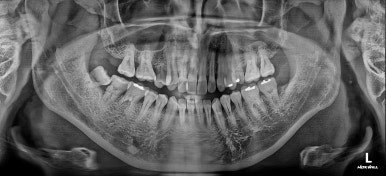
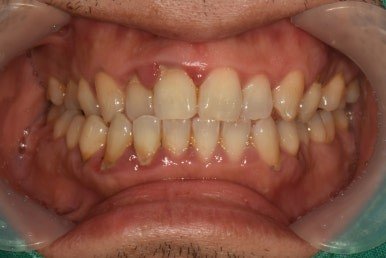
The patient visited us because her gums bled and she had a throbbing pain.
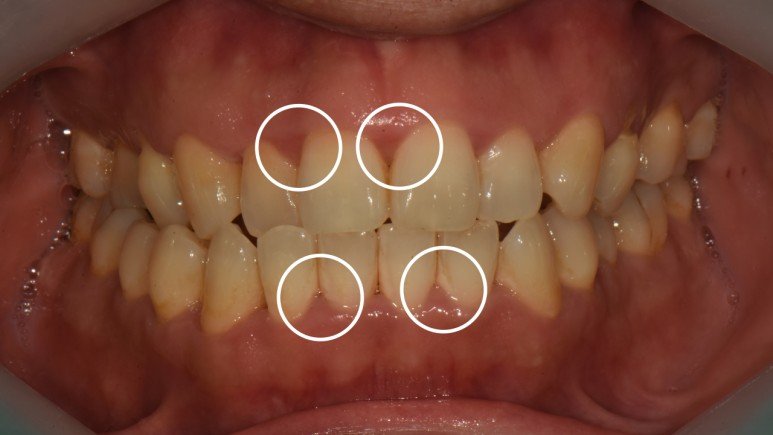
On examination, we observed swollen and red areas of the gums,
and a lot of tartar had built up at the border between the teeth and gums and below the gum line.
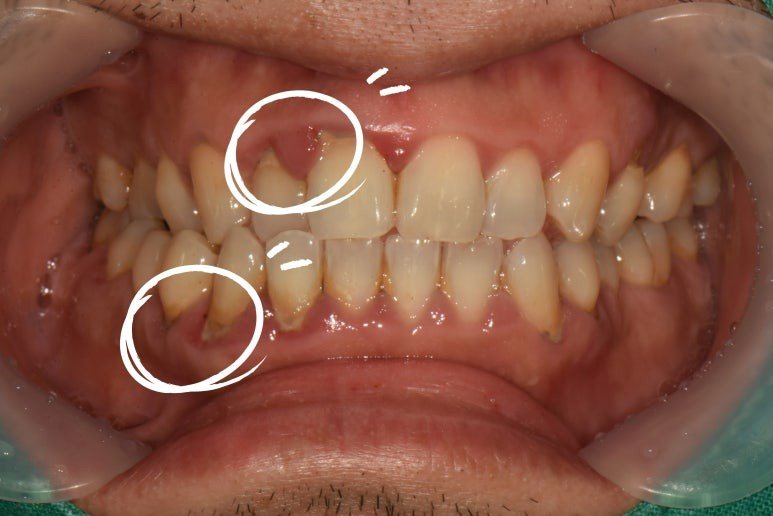
Before treatment: gingival swelling and tartar
Gum disease may start early with nothing more than bleeding or swelling of the gums when brushing.
However, if the inflammation progresses to the tissue that supports the teeth, it can lead to periodontitis,
so it is important to check the current condition of the gums and alveolar bone and receive the necessary treatment.
After the examination, for this patient, in order to manage the tartar and inflammation below the gum line,
we decided to proceed with periodontal treatment.
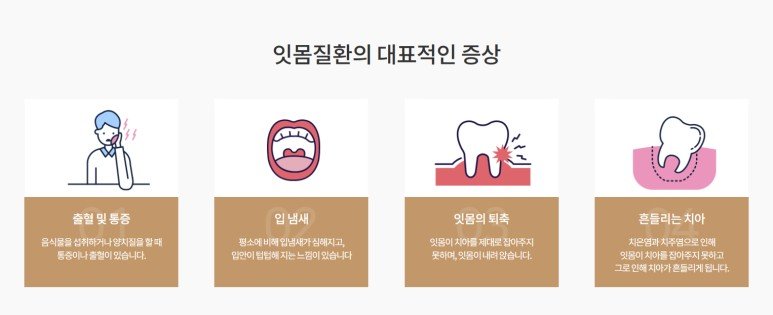
What kind of treatment is gum treatment?
What is commonly called gum treatment means periodontal treatment.
When plaque and tartar continuously build up around the teeth and gums, the gums can become inflamed.
Inflammation limited to the gums is called gingivitis, and when the inflammation progresses and affects the alveolar bone and surrounding tissue
that support the teeth, it is called periodontitis.
When removing tartar from the tooth surface with scaling is not enough,
periodontal treatment may be needed to remove the tartar and plaque below the gum line.
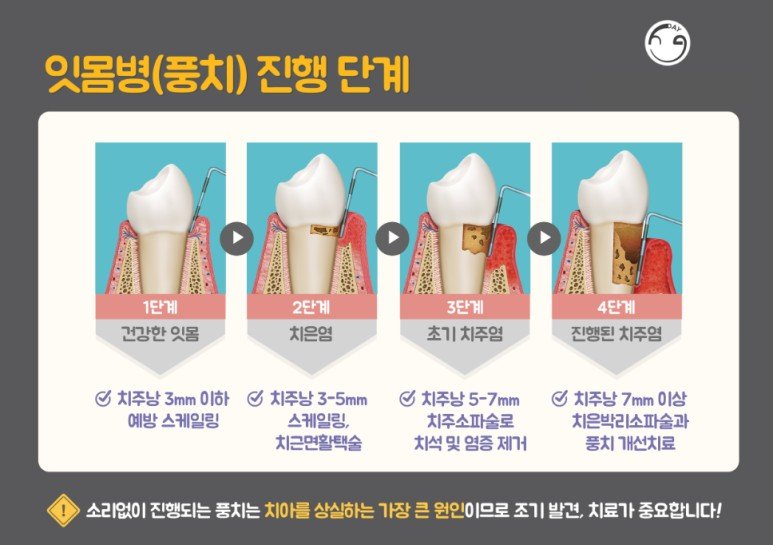
As in the photo above, when tartar forms
and extends below the gum line,
what is commonly known as “periodontal disease” can progress.
What is the gum treatment process?
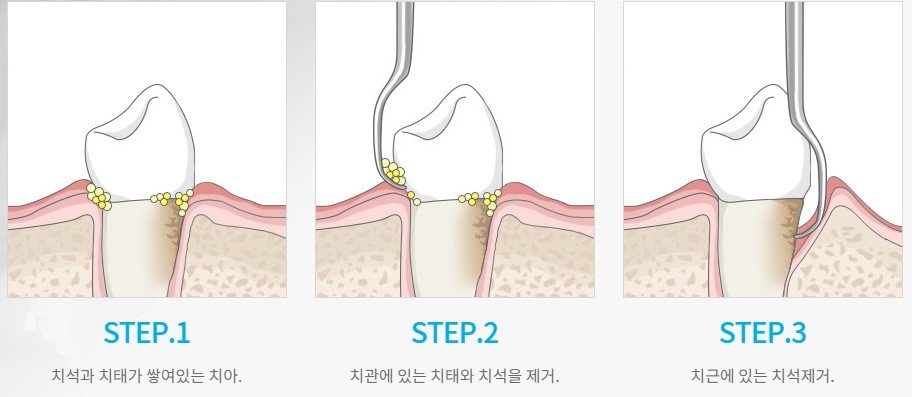
How is gum treatment performed?
For this patient, we performed periodontal treatment after administering local anesthesia to the necessary areas.
Using periodontal instruments, we removed the tartar and plaque attached to the tooth root surfaces below the gum line
and smoothed the root surfaces.
How did the gums change after treatment?
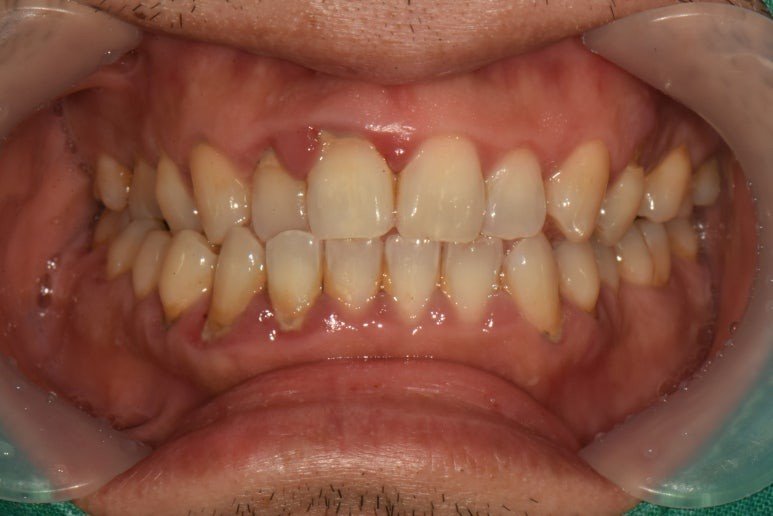
Before treatment, tartar had built up, and swelling and redness of the gums were observed.
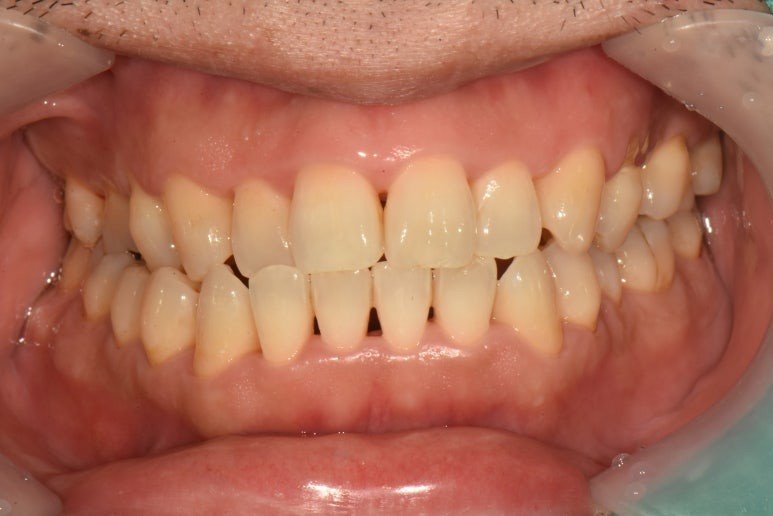
After treatment, the swelling had decreased, but some plaque remained in some areas
and some signs of gum inflammation were still observed.
Periodontal treatment does not end with treatment at the dental clinic;
daily oral hygiene care, such as brushing and interdental cleaning after treatment, must go along with it.
For this patient as well, we additionally managed the necessary areas
and guided her so that proper oral hygiene care would continue.
Why do the gums seem to have receded after gum treatment?
After gum treatment or scaling,
“My gums seem to have gone down more than before.”
is something some people say.
In fact, as tartar is removed and inflammation and swelling decrease,
the volume of the swollen gums shrinks, so the teeth may look longer than before
or the spaces between the teeth may become more noticeable.
In particular, when the tissue supporting the teeth has already been damaged by periodontitis,
these changes may feel more pronounced after treatment.
When we checked again about a month later for this patient,
compared with before treatment, we could see that the swelling and redness of the gums had decreased.
What happens if gum disease is left untreated?
As periodontitis progresses, the alveolar bone and periodontal tissue that support the teeth can be damaged, and depending on the degree of progression, the teeth may become loose or eventually become difficult to keep.
So rather than waiting until the symptoms go away, it is important to check the current condition of the gums
and receive the necessary treatment and care.
Regular care is important after gum treatment.
After periodontal treatment, to check the condition of the gums, how quickly tartar returns, and the state of oral hygiene care,
regular check-ups and maintenance are needed.
The check-up interval is not the same for every patient
and can vary from person to person depending on the severity of the periodontal disease, risk factors, and the state of care after treatment.
When plaque control is still needed after treatment, as with this patient,
it is important to check the condition periodically and manage the necessary areas.
If your gums repeatedly bleed, swell, or hurt, please first check whether you simply need scaling
or whether treatment below the gum line is needed.
The before-and-after photos in this case were published with the patient's consent.
After periodontal treatment, temporary bleeding, sensitivity, pain, or discomfort may occur, and the treatment process and results vary from person to person. The specific treatment method is decided after an examination of the periodontal condition and a diagnosis by the dental team.
Related cases:
Impacted Wisdom Tooth Extraction in Seomyeon, Busan: Checking the Nerve Position with CT
Root Canal Retreatment in Seomyeon, Busan: A Long-Term Follow-Up Case Preserving the Natural Tooth
Same-Day Inlay in Seomyeon, Busan: A Case of Treating Cavities in One Day
Related information: View other treatment cases · General dental information is also available on the Korean Dental Association.