Hello.
From the heart of Seomyeon,
drawing tomorrow's smile,
this is Smile Digital Dental Clinic 🙂
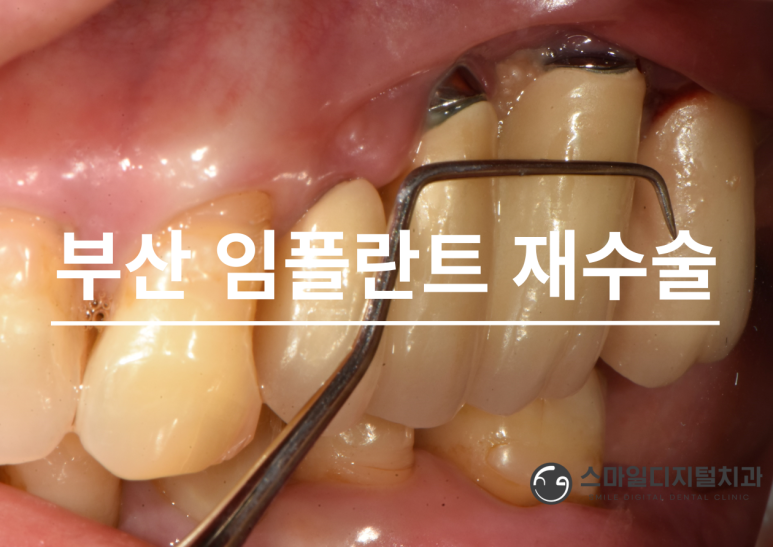
Today we cover dental implants, and specifically the topic that worries and concerns many patients the most:
implant revision surgery.
A loose implant does not always have to be removed and placed again right away.
First we need to check whether the implant itself is moving, whether the problem lies in the restoration or the screw,
and whether there is bone loss or inflammation around it.
Today we introduce a real case of a patient in her 70s in which a problem with an existing implant was found during a regular checkup of implants in another area,
and, after re-diagnosis with CT,
the existing implant was removed,
followed by bone grafting and re-placement.
Table of contents
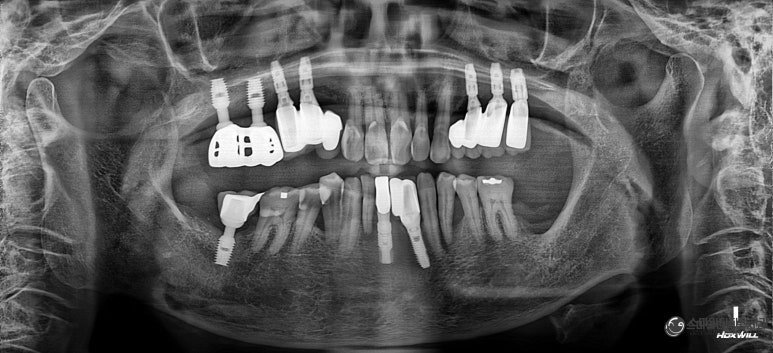
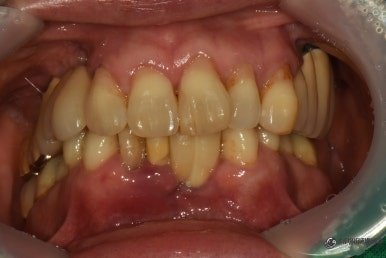
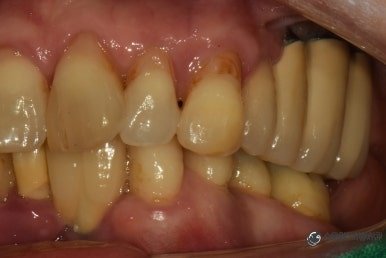
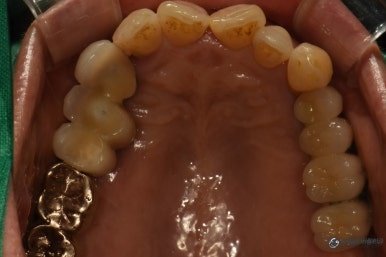
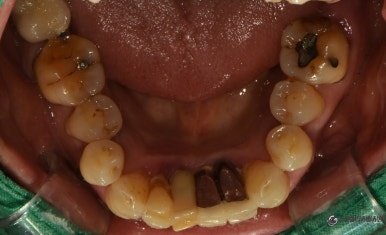
The patient is a woman in her 70s.
She already had implants in several places, but for implant treatment of a loose tooth
she visited our clinic.
Because her lower teeth were loose, the front teeth were connected to the existing implant crowns from another clinic
and restored with new prostheses,
and a single implant was placed for each of the premolars to complete the treatment.
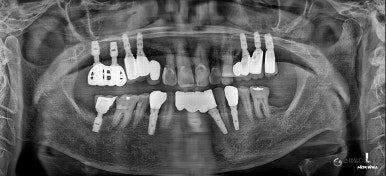
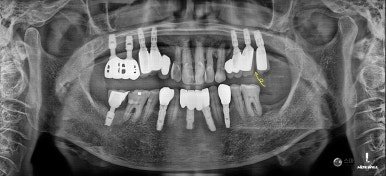
After the implant treatment was finished, she came in for a checkup every six months.
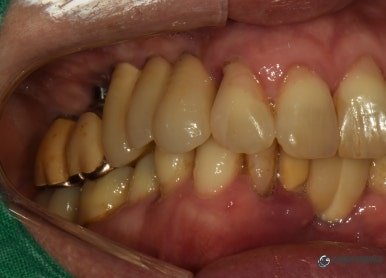
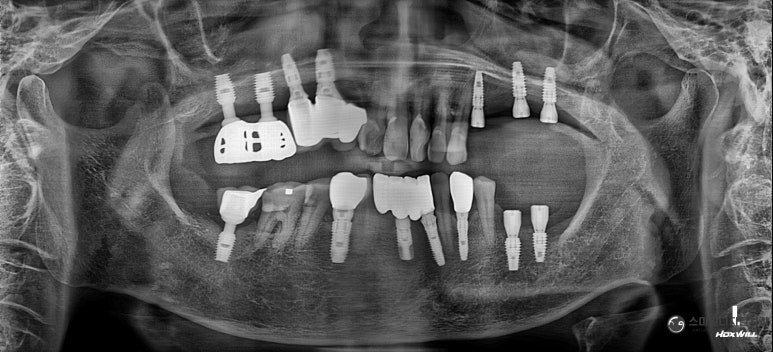
In the upper left (upper right in the photo), the gap between the existing implants
had opened up.
Natural teeth can move.
That is why teeth can be moved with orthodontic treatment.
Implants, however, fuse completely with the alveolar bone,
so they hardly move even if you try to move them on purpose.
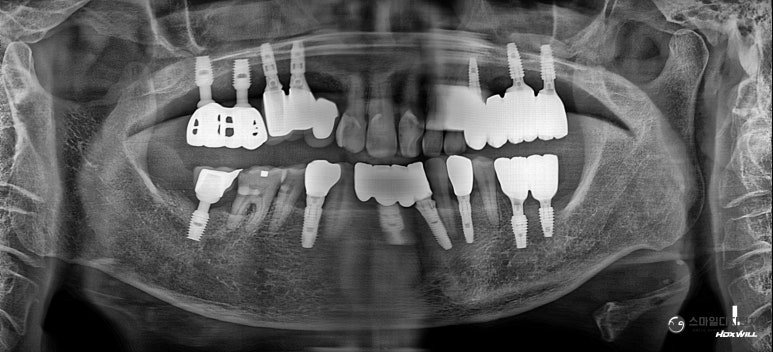
The checkup showed that the alveolar bone around the implant had resorbed and the implant was no longer attached to the bone.
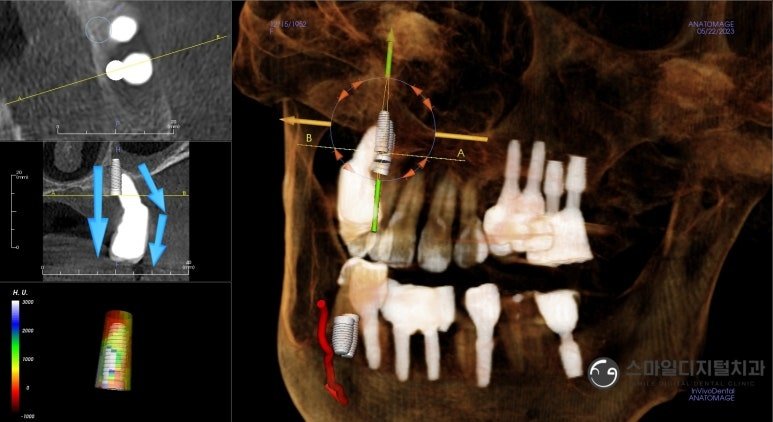
On the CT, we checked the placement direction of the existing implants together with the direction of the restoration.
For a more precise diagnosis, we took a CT scan.
On the CT, a difference was seen between the placement direction of the existing implants
and the direction of the final restoration.
We checked the placement direction of the existing implants, the shape of the restoration, the bite,
and the bone loss around the implants together.
After evaluating all of these factors together,
we judged that it would be difficult to keep the existing implants and planned removal followed by re-placement.
We explained the findings from the imaging and the treatment plan to the patient.
She agreed to the implant revision surgery, and we proceeded with treatment.
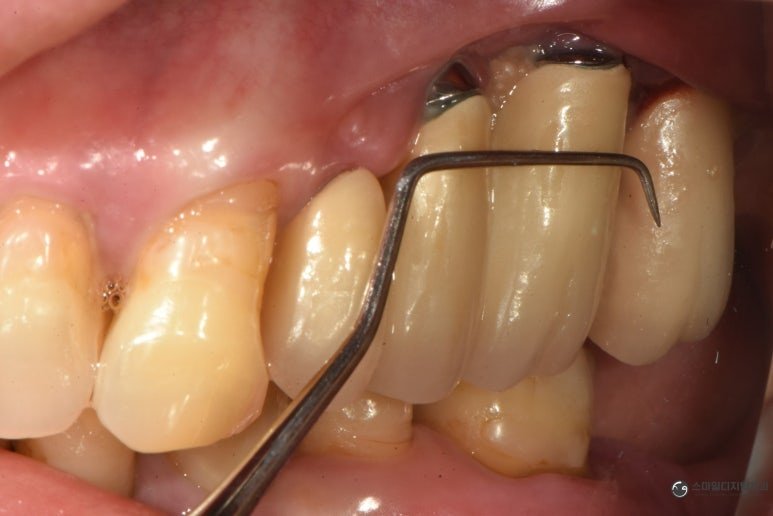
Why We Did Not Place a New Implant Right After Removing the Old One
After checking the condition of the bone and soft tissue where the existing implants were removed,
we waited for a period of healing.
Afterward, we re-placed the implants and performed alveolar bone grafting in the areas that needed it.
Implant revision surgery is not done the same way for every patient.
After the existing implant is removed, we check the amount and shape of the remaining bone, the state of inflammation, and whether a new implant can achieve initial stability, and then decide whether to re-place the implant immediately or after a healing period.
The director decided to proceed with treatment in a way that also restores the gum that had receded.
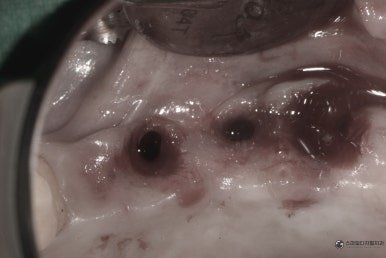
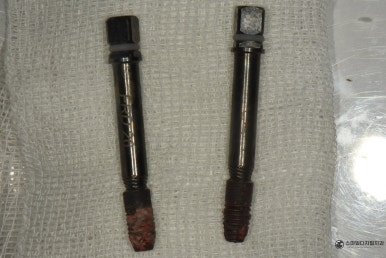
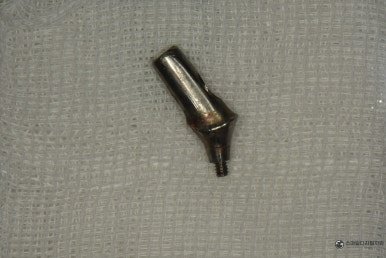
(First photo) We first removed the implant abutment and crown,
(Second photo) and then removed the existing implant roots.
(Third photo) This is the abutment that was removed.
After removing the existing implants, we waited about a month for healing,
and then performed implant revision surgery with a bone graft (alveolar bone grafting).
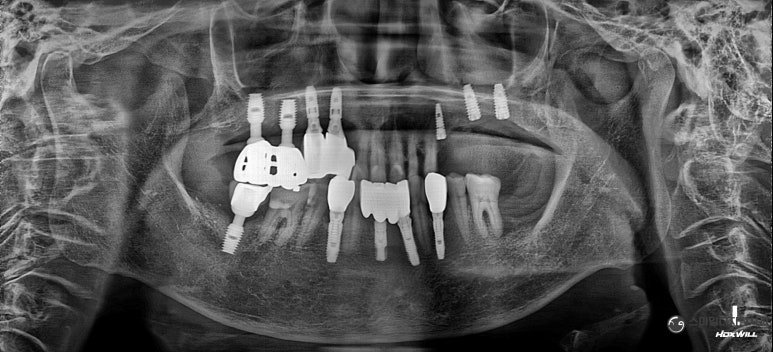
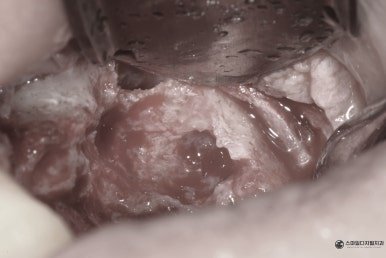
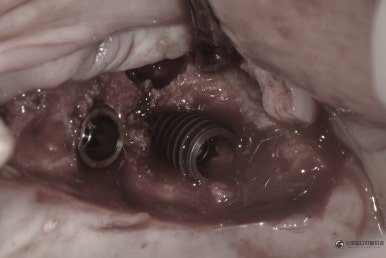
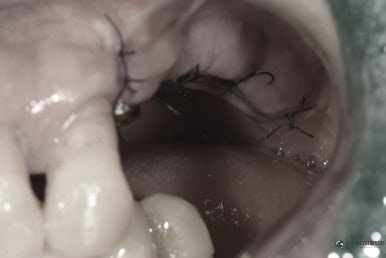
Once the area where the implants had been removed had healed, we performed implant revision surgery and a bone graft.
After re-placement and bone grafting, we allowed about three months of healing, checked the condition,
and then performed the second-stage surgery.
After the healing period, we check X-rays and the condition inside the mouth,
and measure implant stability (ISQ) with the DIO IDx to decide when to proceed with the restoration.
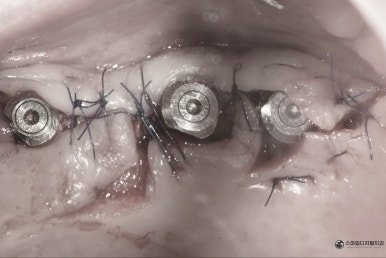
For this patient, taking into account the condition of the bone and soft tissue around the implants,
we carried out additional procedures in the areas that needed them.
Because so much of the jawbone had been lost in this patient, during the second-stage surgery
we performed alveolar bone grafting once more in the areas where bone was lacking.
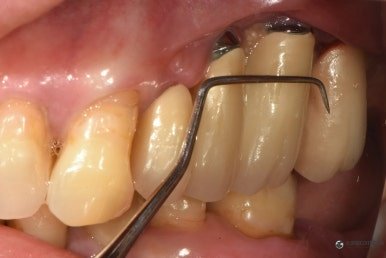
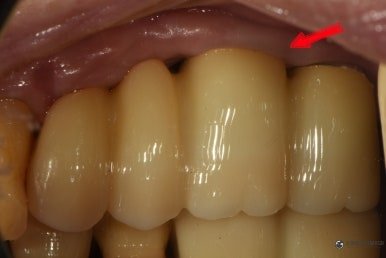
These are the photos after treatment.
Before treatment, there was almost no gum around the implants in this area,
and only the part connecting directly to the mucosa and lip remained,
but comparing the before and after photos, you can see changes in the shape of the soft tissue around the implants and in the length and shape of the final restoration.
What Matters Most in Implant Revision Surgery Is Finding the Cause
Implant revision surgery is not a treatment that ends
with simply removing the existing implant and placing a new one.
It is important to re-check what was wrong with the existing implant, what the surrounding bone and gums are like,
and where a new implant can be placed;
this re-examination is the key step.
For this patient as well, after finding a problem with the existing implant at a regular checkup,
we checked the condition with X-rays and CT,
and proceeded with treatment in this order: removal of the existing implant → healing period → bone graft and re-placement
→ second-stage surgery → final restoration.
If you are looking into implant revision surgery or implant retreatment in Busan or Seomyeon,
it is more important to first find out exactly why the current problem occurred
than to simply place the implant again.
The treatment method and duration may vary depending on the bone and gum condition around the implant,
the presence of inflammation, and other factors.
*The before-and-after photos are published in this post
with the patient's consent
to help readers
understand the content.*
– Treatment results may differ from person to person,
so please
have a thorough consultation with your dental team.
Related cases:
Full Implants With a Digital Guide in Busan Seomyeon: A Case of a Man in His 70s
Full-Arch Implants in Seomyeon, Busan: A Case of a Patient in Her 70s Treated With a Digital Guide
Digital Implant in Seomyeon, Busan: Guided Surgery and Bite Recovery for a 90-Year-Old Patient
Related information: Same-day crown & one-day restoration guide · General dental information is also available on the Korean Dental Association.