Hello
From the heart of Seomyeon,
drawing tomorrow's smile,
This is Smile Digital Dental Clinic 🙂
If you feel discomfort around a front tooth crown placed long ago, or your gums bleed, is it enough to simply
make the crown again?
Depending on the condition of the tooth under the existing crown, the gums, and the area around the tooth root, additional treatment such as root canal retreatment or non-vital tooth whitening may be needed first.
Today we introduce the treatment of a patient in her 40s who visited because of sensitivity and gum bleeding
around a front tooth crown placed eight years ago.
Table of contents
December 9, 2025
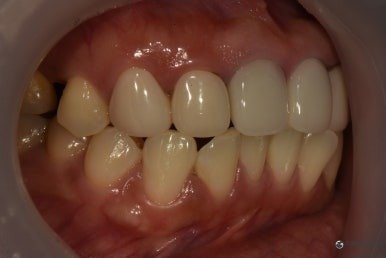
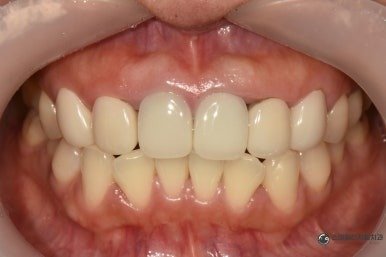
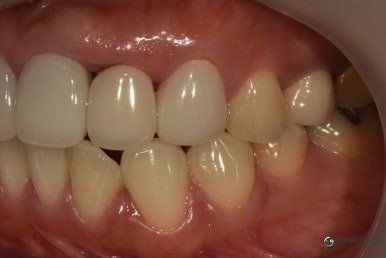
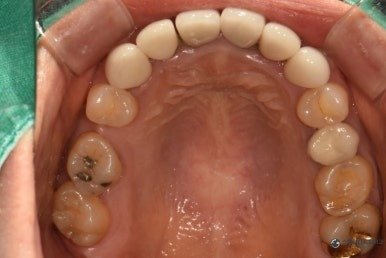
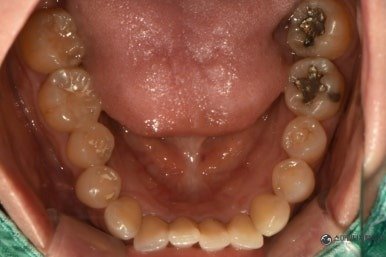
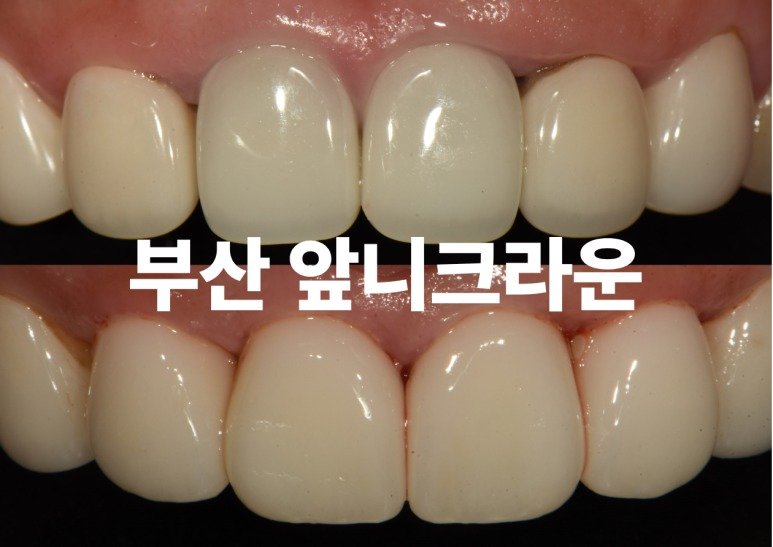
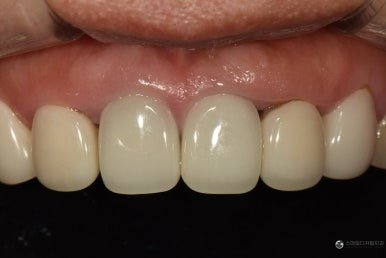
Front teeth before treatment, December 9, 2025
She Was Uncomfortable With Front Tooth Crowns Placed 8 Years Ago
The patient is a woman in her 40s who received front tooth crown treatment about eight years ago.
Recently her front teeth had become sensitive and her gums bled, so she visited for an examination.
She had existing crowns on the six upper front teeth, and the two central incisors among them had previously
undergone root canal treatment.
Between some teeth the gums had receded and left visible spaces, while around some of the crowns
we needed to recheck the relationship between the shape of the restoration and the gums.
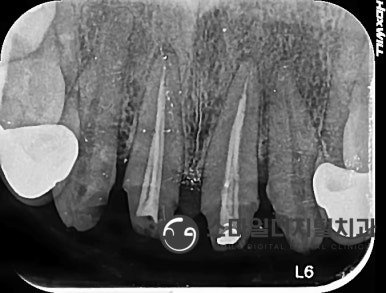
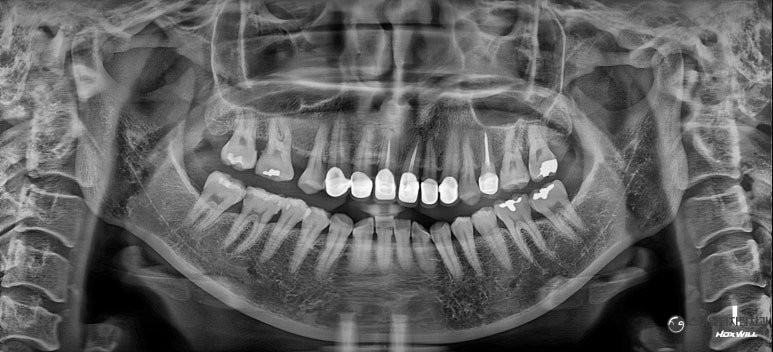
X-rays before treatment, December 9, 2025 / January 3, 2026
X-rays Showed a Lesion Around the Root Tips
On X-ray, a radiolucent area was seen around the root tips of the two central incisors that had undergone root canal treatment.
After reviewing the condition of the previous root canal treatment and her current symptoms, we planned to carry out root canal retreatment first
and then make new crowns.
Of the six existing front crowns, we decided to remove the restorations on the four front teeth other than the canines, check their condition, and retreat them.
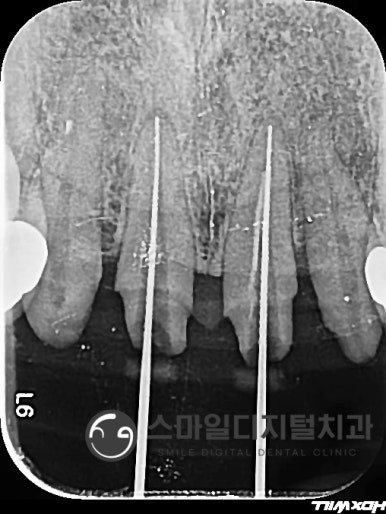
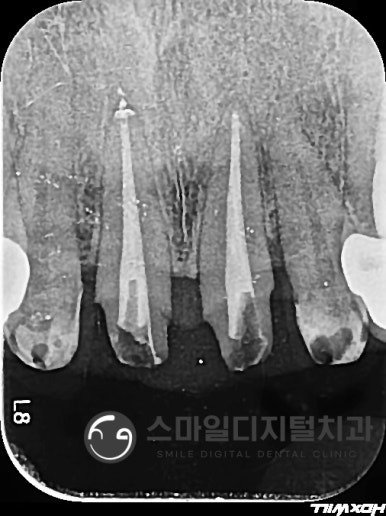
Root canal retreatment process, January 3 / January 10, 2026
We Removed the Existing Crowns and Performed Root Canal Retreatment
Root canal retreatment begins by removing the material used in the previous root canal treatment and
re-examining the root canals inside the tooth.
After removing the old root canal filling, we checked the length and shape of the canals, cleaned and disinfected the inside, and
filled the canals again.
The reason retreatment is needed and the method differ from tooth to tooth, so
we decide after reviewing X-rays and the clinical examination together.
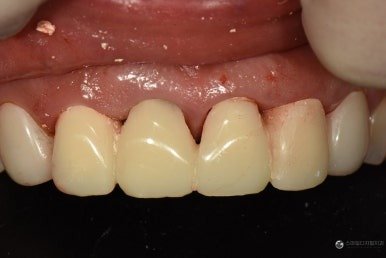
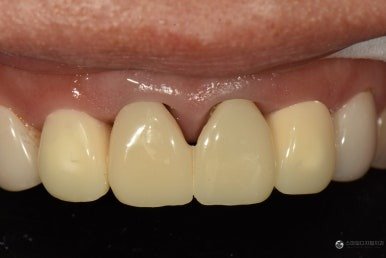
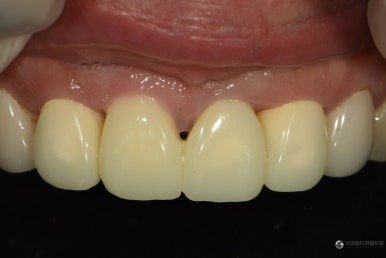
Temporary teeth and gum changes, January 3 / January 10 / February 11, 2026
We Used Temporary Teeth to Observe the Gums as Well
After removing the existing crowns, we used temporary teeth instead of making the final crowns right away.
While checking the shape of the gums around the old restorations, we adjusted the temporary teeth so that they did not put excessive pressure on the gums
and observed changes in the gum tissue.
Comparing the photos, you can see that the gum shape changed between the early stage of treatment and later,
after some time had passed.
However, adjusting the shape of the temporary teeth does not mean that every black triangle disappears or
that the gum between the teeth is always filled in again.
The shape of the gum between teeth is affected by many factors, such as the alveolar bone, the position of the contact point, the shape of the teeth and restorations,
and the condition of the periodontal tissue.
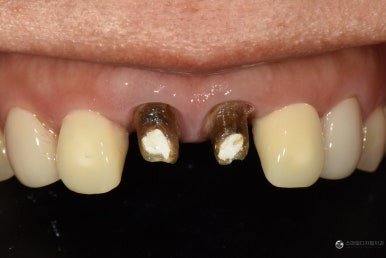
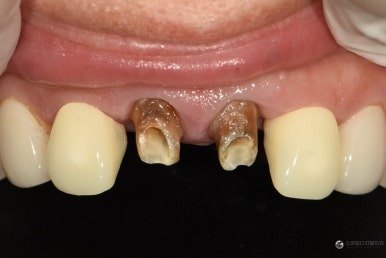
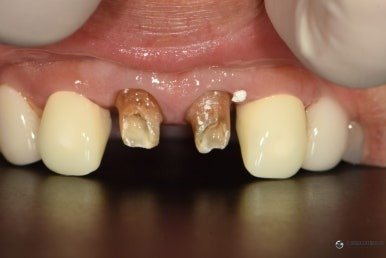
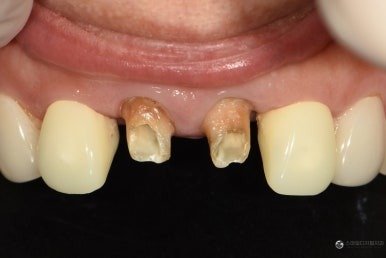
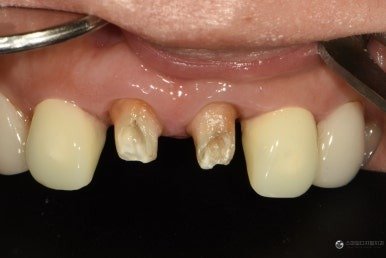
January 10 / January 16 / January 22, 2026
February 11 / February 24, 2026: non-vital whitening process
We Whitened the Discolored Front Teeth From the Inside (Non-Vital Whitening)
When we removed the existing crowns, the color of the front teeth that had undergone root canal treatment
had darkened compared with the neighboring teeth.
In such cases, before making the final crowns, to reduce the dark tone of the tooth itself,
non-vital whitening can be considered.
Non-vital whitening is a treatment in which a whitening agent is applied inside a tooth that has had root canal treatment
to improve the discoloration.
In this patient, we checked the change in tooth color while she visited about once a week,
and carried out non-vital whitening for more than a month.
As treatment progressed, you can see the dark tooth becoming lighter.
The number of sessions, the duration, and the degree of color change vary from person to person, and even after treatment
the color may change again.
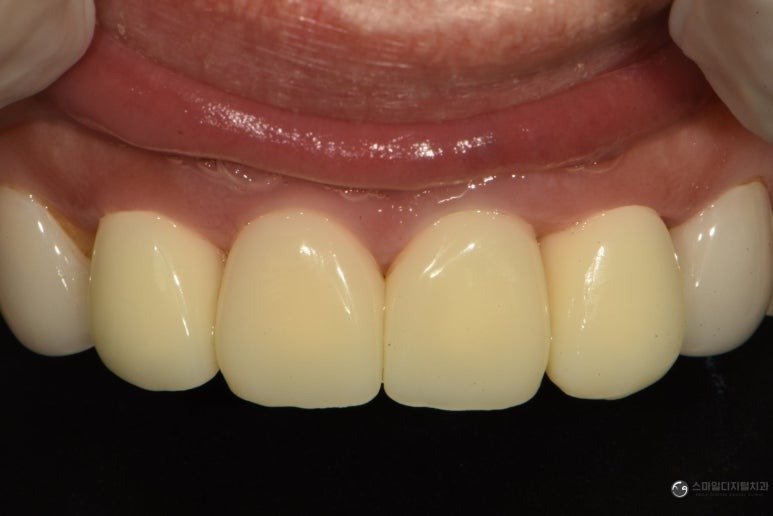
Temporary teeth in their final shape, March 11, 2026
We Checked the Shape With Temporary Teeth Before the Final Crowns
After finishing root canal retreatment and non-vital whitening and checking the gums, we made temporary teeth that took the shape of the final restorations
into account.
For front teeth, rather than making the final crowns right away, the temporary stage lets us check the length and width of the teeth,
their alignment, and how well they harmonize with the neighboring teeth.
For this patient too, we checked the shape of the temporary teeth, adjusted what was needed, and then
made the final zirconia crowns.
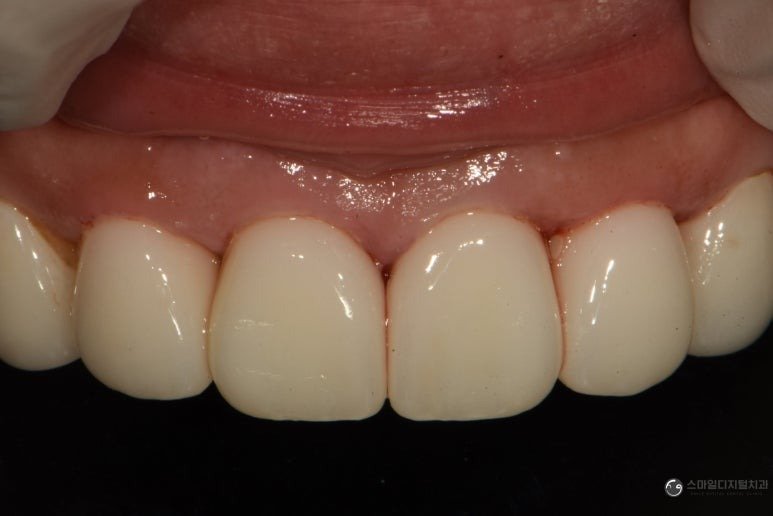
Final zirconia crowns, March 11, 2026
We Completed Four Zirconia Crowns on the Front Teeth
This is how the final crowns look once placed.
In this treatment, we did not simply replace the old crowns with new ones,
but proceeded in the following order: removing the existing crowns → checking the teeth and gums → root canal retreatment → non-vital whitening → checking the gums and restoration shape with temporary teeth → making the final zirconia crowns
in that order.
After placing the final crowns, we checked that no cement remained around the gums and cleaned up where needed.
Before treatment, we needed to check the shape of the existing front crowns and gums, and the condition around the root tips of the
root canal-treated teeth, together.
After treatment, after root canal retreatment and non-vital whitening, new front crowns were placed,
and you can see how they look.
Old Front Tooth Crowns: Is Replacing Only the Crown Enough?
Even if a problem develops with an old front tooth crown, replacing only the crown is not always the answer.
The treatment order must be decided after checking together the condition of the tooth beneath the existing crown, whether it has had root canal treatment, the tissue around the root, the gums, and tooth discoloration.
As with this patient, if a problem is found around the root tip of a root canal-treated tooth,
root canal retreatment can be considered first, and if the discoloration of the root canal-treated front tooth is judged likely to affect the color of the final restoration, non-vital whitening may also be considered.
It is also important to consider not only the color and shape of the teeth but also the relationship between the crown and the gums, and whether the shape is easy for the patient to keep clean.
The before-and-after photos in this case were published with the patient's consent.
Treatment methods and results vary from person to person. Symptoms may persist after root canal retreatment or additional treatment may be needed, the response and number of sessions for non-vital whitening vary with the condition of the tooth and the color may change again afterward, and sensitivity, discomfort, or fracture or loss of the restoration may occur even after crown treatment, so the specific treatment method is decided after an examination.
Related cases:
Seomyeon, Busan Front Tooth Crown: Re-Treating a Root-Only Tooth While Preserving It
Front Tooth Crown in Busan Seomyeon: Retreating an Old PFM Crown with a Zirconia Crown
Front Tooth Crown in Seomyeon, Busan: Non-Vital Tooth Whitening and Gum Surgery Together
Related information: Same-day crown & one-day restoration guide · General dental information is also available on the Korean Dental Association.